

 EN
EN  English
 中文简体
中文简体 русский
In a lot of industrial settings, fluid handling doesn't get much attention—it just runs in the background, quietly holding everything together. But how well it works ends up shaping a lot more than people realize: how stable a process is, how efficiently it runs, how safe it stays day to day. Diaphragm pumps have carved out a pretty solid place in that landscape, showing up across all kinds of sectors precisely because they bend to fit so many different jobs, from basic transfer work up to setups that push equipment a lot harder.
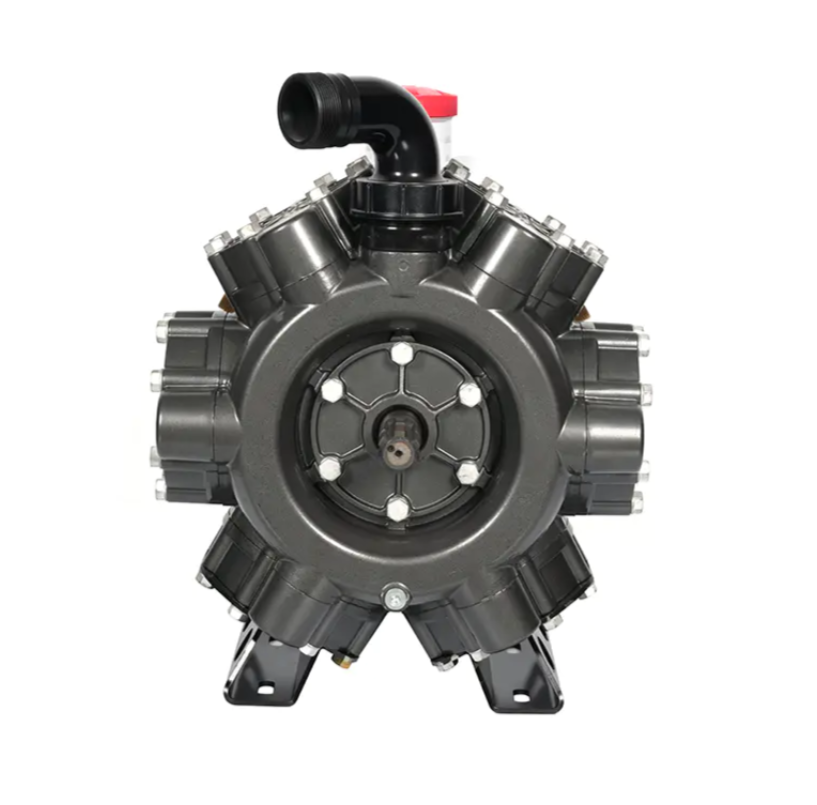
As that demand keeps climbing, though, the market's gotten crowded. More companies are entering the space, and a lot of them are selling products that look nearly identical on paper, with the real differences sitting somewhere below the surface. That puts buyers in a tougher spot than they might expect. Picking a diaphragm pump supplier isn't really a price-and-delivery-date decision anymore—it's the kind of choice that quietly follows a business for years, showing up in downtime, maintenance costs, and how much trouble equipment causes down the line.
That reality has forced a lot of companies to think harder about what actually makes a supplier worth trusting. And once they start digging into that question, the practical concerns tend to pile up fast.
What Does a Diaphragm Pump Company Actually Provide?
At a glance, most suppliers appear to offer similar solutions. They manufacture or distribute pumps designed to move liquids in controlled ways. Yet, the role of a diaphragm pump company often goes beyond simple production.
A supplier may support customers in several ways:
- Understanding application needs
- Suggesting suitable configurations
- Offering customization options
- Providing after-sales assistance
Some companies operate mainly as trading firms. Others manage their own production facilities. The difference can shape communication, flexibility, and consistency.
A company such as Jinhua Shuangding Machinery Co., Ltd. reflects a model where production and supply are closely linked. This type of structure often allows quicker adjustments when customer needs change. It can also reduce misunderstandings during the ordering process.
Why Does Supplier Selection Matter More Than Before?
The market's changed shape over the past several years, and buyer behavior has shifted right along with it. Companies aren't just looking for a one-off purchase anymore—they're trying to lock in relationships with suppliers who'll actually be there to support operations long after the initial sale closes.
A handful of things pushed things in that direction. Supply chains got a lot more tangled than they used to be, with more moving parts and more places for something to go wrong. Product options multiplied too—there's a lot more variation out there now than a straightforward "one size fits most" catalog. Customization has become the norm rather than the exception, which means suppliers need to actually understand a buyer's specific setup instead of just shipping a standard unit. And maintenance expectations have crept up alongside all of that, with buyers wanting more support after the sale, not less.
None of that happens in a vacuum, either. A diaphragm pump doesn't operate on its own—it's wired into a larger system, working alongside other equipment that depends on it doing its job consistently. When it stumbles or fails outright, that disruption doesn't stay contained. It ripples outward and can stall an entire workflow.
That's really the reason reliability has climbed so high on companies' priority lists. Going with the cheap option upfront can look appealing on a spreadsheet, but it doesn't always hold up once you factor in downtime, repairs, and the cost of things going sideways. More often than not, stability and ongoing support end up mattering a lot more than whatever number was on the initial quote.
How Can You Evaluate a Diaphragm Pump Company?
Evaluation is rarely based on a single factor. It involves observing how a company communicates, delivers, and responds.
Here are some areas buyers often consider:
| Evaluation Aspect | What to Look For |
|---|---|
| Communication | Clear, timely, and consistent responses |
| Production Capability | Ability to handle varying requirements |
| Flexibility | Willingness to adjust designs or orders |
| Support | Availability of guidance after purchase |
| Transparency | Open sharing of process and information |
A supplier that listens carefully tends to understand project needs more accurately. This can reduce delays and avoid repeated adjustments.
Another useful signal is how a company handles questions. A thoughtful response often reflects internal experience and organization.
What Role Does Customization Play in Supplier Choice?
Standard products cover a lot of ground, and for plenty of applications, they're genuinely enough. But once you get into more specific setups, small mismatches start showing up—maybe a connection type doesn't quite line up with existing piping, or the working environment pushes materials harder than a standard unit was built to handle. That's usually where customization enters the picture.
What that actually looks like varies a fair bit depending on the situation. Sometimes it's as simple as swapping materials to better handle a corrosive or abrasive fluid. Other times it goes further—reworking part of the structure, changing how the unit connects into the rest of the system, or adapting the whole design to hold up in a harsher or more unusual environment.
Not every supplier wants to go there, though. Some stick to fixed designs on purpose, mostly because it keeps production efficient and predictable. Others take a different approach and stay genuinely open to adjusting things based on what a customer actually needs.
That openness ends up mattering more than it might seem at first glance. A supplier willing to customize gives businesses room to adapt equipment to their setup instead of tearing apart an entire system just to make something fit. In industries where processes and requirements keep shifting over time, that kind of flexibility isn't just convenient—it's often what keeps operations running smoothly without constant rework.
Jinhua Shuangding Machinery Co., Ltd. is a decent example of what that balance can look like in practice—leaning on standard production where it makes sense, while staying flexible enough to adjust when a customer's situation calls for it. That kind of approach lets equipment fit more closely with how a business actually operates, rather than forcing the business to work around the equipment.
Are All Diaphragm Pump Companies Suitable for Every Industry?
Different industries have different expectations. A supplier that performs well in one field may not be the right fit for another.
Common application areas include:
- Fluid transfer in manufacturing
- Handling of sensitive liquids
- Use in environments requiring controlled flow
- Support for cleaning or circulation processes
Each setting introduces its own challenges. Some require careful handling of materials. Others demand consistent operation over long periods.
When evaluating a supplier, it helps to understand their experience with similar applications. Familiarity with a specific industry can shorten communication time and reduce trial-and-error.
This does not mean a company must specialize narrowly. It means they should show awareness of different working conditions and be able to adapt accordingly.
How Do Diaphragm Pump Companies Approach Quality?
Quality is often discussed, yet not always clearly defined. It can refer to materials, assembly, or consistency over time.
From a buyer's perspective, quality shows up in practical ways:
- Stable performance during use
- Fewer unexpected interruptions
- Ease of integration into existing systems
- Predictable maintenance needs
Companies approach quality in different ways. Some focus on strict internal processes. Others rely on experience and gradual improvement.
A useful sign is how a supplier talks about their process. Clear explanations suggest a structured approach. Vague answers may indicate less control.
Quality is not only about the product itself. It also includes packaging, delivery, and communication. Each step contributes to the overall experience.
What Should You Know About Pricing and Cost Considerations?
Price often attracts attention early in the selection process. It is easy to compare numbers. It is harder to understand what those numbers represent.
Costs may vary due to:
- Production methods
- Material choices
- Order volume
- Level of customization
A lower price does not always indicate better value. It may reflect simplified processes or limited support.
Businesses sometimes benefit from looking beyond the initial figure. Considering the broader picture can help avoid hidden expenses later.
Here is a simple comparison approach:
| Cost Factor | Short-Term Focus | Long-Term Perspective |
|---|---|---|
| Purchase Price | Immediate expense | Part of overall investment |
| Maintenance | Often overlooked | Affects ongoing operations |
| Downtime Impact | Hard to predict | Can influence productivity |
| Supplier Support | May seem optional | Helps reduce risk |
A balanced view of cost allows businesses to align spending with operational goals rather than short-term savings.
How Important Is Communication in Supplier Relationships?
Communication often shapes the entire cooperation experience. It begins with inquiry and continues through delivery and support.
Clear communication can help in several ways:
- Reducing misunderstandings
- Speeding up decision-making
- Building mutual trust
- Supporting long-term cooperation
Some suppliers focus mainly on transactions. Others aim to build ongoing relationships. The difference becomes visible over time.
When a company responds with clarity and patience, it creates a smoother working process. This is especially useful when dealing with customized or evolving requirements.
Language, time zones, and cultural differences may also influence communication. A supplier who manages these aspects well can simplify cross-border cooperation.
Can a Diaphragm Pump Company Support Long-Term Business Growth?
A supplier relationship often starts with a single order. Over time, it may expand into a broader partnership.
Businesses grow, and their needs change. A suitable supplier should be able to adapt to these changes without causing disruption.
Long-term support may include:
- Adjusting production scale
- Introducing new variations
- Providing consistent service
- Maintaining stable communication
Companies like Jinhua Shuangding Machinery Co., Ltd. illustrate how a supplier can evolve alongside its customers. By maintaining flexibility and responsiveness, such companies can support gradual expansion without requiring frequent supplier changes.
This continuity can reduce risk and simplify management. It also allows both sides to understand each other's expectations more deeply.
What Signals a Reliable Diaphragm Pump Company?
Reliability is not always visible at the beginning. It reveals itself through repeated interactions.
Some practical signals include:
- Consistent response times
- Clear order handling
- Stable product quality
- Willingness to address issues
Trust builds slowly. Small details often matter more than large promises.
A company that communicates openly and delivers as expected creates confidence. Over time, this confidence becomes a key factor in continued cooperation.
In a market with many options, choosing a diaphragm pump company becomes a process of observation and comparison. Each decision reflects not only immediate needs but also future expectations.
 Previous