

 EN
EN  English
 中文简体
中文简体 русский
Diaphragm pump backpack sprayer may look like a simple piece of outdoor equipment. There is a tank on the back, a hose, a wand, and a pump. Yet the pump inside the system has a major influence on how the sprayer behaves.
Two pump designs appear frequently in backpack sprayers: the diaphragm pump and the piston pump. Both are designed to move liquid and create the pressure needed for spraying. Their basic purpose is similar, but the way they handle liquid is different.
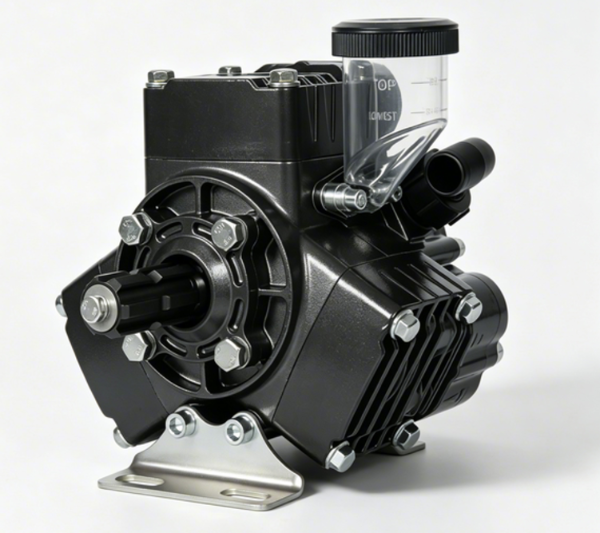
A piston pump uses a moving piston inside a cylinder. The movement draws liquid into the pump area and pushes it toward the spray system. A diaphragm pump uses a flexible diaphragm that moves back and forth to create the pumping action.
These different designs can affect how the sprayer handles certain liquids, how it responds during use, and how much attention it may need during maintenance. Choosing between them is therefore less about deciding which design is universally better and more about matching the pump with the intended work.
How Does a Piston Pump Work in a Backpack Sprayer?
A piston pump creates movement through a solid piston that travels inside a cylinder. When the pump handle is operated, the piston moves through the cylinder and changes the space available for the liquid.
This movement creates the pressure needed to move the spray liquid toward the wand and nozzle. Check valves within the pump help keep the liquid moving in the intended direction.
The design is relatively straightforward. The piston moves in a controlled path, while the cylinder provides the space in which that movement takes place. This arrangement has been used in many manual backpack sprayers because it provides a direct way to create spraying pressure.
The behavior of a piston pump is closely connected to the liquid being sprayed. Clean, relatively smooth liquids are generally easier for this type of pump to handle because the piston and its surrounding surfaces need to move freely.
If unwanted particles or residue enter the pump area, they can interfere with that movement. Certain abrasive materials may also cause wear on the parts that move against each other.
This makes the piston pump particularly suitable for applications where the spray liquid is compatible with the pump's internal construction. Its simple mechanical arrangement can also make inspection and servicing relatively straightforward. Industry guidance commonly identifies piston pumps as a practical choice for conventional liquid spraying applications while warning against abrasive mixtures and some powder-based formulations.
How Does a Diaphragm Pump Work in a Backpack Sprayer?
A diaphragm pump uses a flexible membrane instead of a solid piston moving inside a cylinder.
When the pump handle is operated, the diaphragm flexes. This movement changes the space around the diaphragm and creates the action needed to draw liquid into the pump and move it toward the outlet.
The flexible material is the key difference. The diaphragm moves without relying on the same sliding contact between a piston and cylinder.
This gives the pump a different way of dealing with liquid. Particles or suspended material in the spray mixture are less likely to create the same type of contact problem found in a piston arrangement.
The diaphragm is also separated from the main moving surfaces by its flexible design. This can make the pump more forgiving when the liquid contains material that might otherwise cause problems for a close-fitting piston.
A diaphragm pump does not remove the need for cleaning or care. Residue can still collect inside a sprayer, and the diaphragm itself can wear over time. The important difference is how the pump responds to certain types of spray mixtures.
For users who regularly work with liquids that may contain suspended particles, the diaphragm design can therefore provide a useful alternative. Industry comparisons commonly point to this difference in liquid handling as one of the main reasons to choose a diaphragm backpack sprayer.
What Is the Main Difference Between Diaphragm and Piston Pumps?
The two designs may be installed in similar backpack sprayers, but their internal pumping methods are quite different.
| Feature | Diaphragm Pump | Piston Pump |
|---|---|---|
| Main moving part | Flexible diaphragm | Solid piston |
| Pumping movement | Flexible back-and-forth movement | Piston movement inside a cylinder |
| Handling of suspended material | Generally more tolerant | More sensitive to particles |
| Suitable liquid type | Can handle a broader range of mixtures | Better suited to compatible liquid formulations |
| Pressure behavior | Often associated with moderate spraying pressure | Often capable of stronger spraying pressure |
| Maintenance focus | Diaphragm condition and cleaning | Piston, cylinder, seals, and cleaning |
| Typical design advantage | Flexibility with difficult mixtures | Direct pressure generation and simple servicing |
The table shows why there is no single answer for every user.
A gardener working mainly with clean liquid formulations may have little reason to choose a diaphragm pump. A user handling mixtures that contain suspended material may have a different set of priorities.
Spray distance can also influence the decision. Piston designs are generally associated with stronger pressure and can therefore provide a more forceful spray. Diaphragm designs usually place more emphasis on liquid compatibility and resistance to problems caused by suspended material.
The choice should therefore begin with the work rather than the pump name.
Which Pump Handles Different Spray Mixtures Better?
The type of liquid being sprayed is one of the important factors when comparing the two designs.
A piston pump works well when the liquid is relatively clean and does not contain materials that can cause excessive wear inside the cylinder. This makes it suitable for many common liquid spraying tasks.
The situation changes when the mixture contains suspended particles, powders, or materials that can be more demanding on the pump.
A diaphragm pump is generally more tolerant of these conditions. Since the flexible diaphragm does not slide through a cylinder in the same way as a piston, suspended material has less opportunity to create direct wear between a piston and cylinder surface.
This does not mean every diaphragm pump can safely handle every chemical or mixture. Compatibility still depends on the materials used in the particular pump and the liquid being sprayed. Users should always follow the equipment manufacturer's instructions for chemical compatibility.
The important industry trend is that pump selection is increasingly being treated as a liquid-compatibility decision. Manufacturers and equipment specialists often distinguish piston and diaphragm designs based on the type of formulation they are intended to handle.
For a user who works with straightforward liquid formulations, a piston pump may provide the desired spraying behavior without adding unnecessary complexity.
For a user who regularly works with mixtures containing particles or more demanding materials, a diaphragm pump may be a more suitable direction.
Which Pump Provides a Different Spraying Experience?
The pump affects more than what happens inside the backpack. It also changes the way the spray reaches the target.
Piston pumps are commonly associated with higher pressure. Higher pressure can produce a finer spray and can help project liquid farther from the nozzle.
This can be useful when the user needs to reach foliage or other targets at a greater distance. It can also be useful when a particular application benefits from a finer spray.
A diaphragm pump generally works with a different pressure profile. Its main attraction is not simply how far it can send liquid. The design is more closely connected with handling mixtures that may be less suitable for a piston mechanism.
The difference becomes easier to understand when the work environment is considered.
Imagine two users. One is treating a garden with a clean liquid mixture. The other is working with a formulation that contains suspended material. They may both need a backpack sprayer, but their priorities are not the same.
The first user may care more about spray reach and pressure. The second may care more about how the pump handles the mixture and how easily it continues working when residue or particles are present.
This is why spray performance should not be judged by pressure alone. The right pump is the one that fits the liquid, target, working method, and maintenance routine.
Is a Diaphragm Pump Easier to Maintain?
Maintenance is another area where the two designs behave differently.
A piston pump has several surfaces that move closely together. The piston, cylinder, and sealing components need to remain in suitable condition for the pump to work properly.
Cleaning becomes especially important when the sprayer has been used with materials that can leave residue. If residue dries inside the pump, movement may become more difficult.
A diaphragm pump has a different maintenance profile. The flexible diaphragm is the central working component, so its condition matters. The surrounding pump area still needs to be kept clean, but the design does not rely on a piston sliding against a cylinder.
This can make the diaphragm design more tolerant of certain residues and suspended particles. However, the diaphragm is not immune to wear. Excessive force, unsuitable liquids, poor cleaning, or general aging can eventually affect its condition.
Repair can also differ between the two designs. A piston mechanism may be familiar to many users because of its relatively direct construction. A diaphragm pump may require more attention when the flexible membrane needs to be inspected or replaced.
Neither design eliminates maintenance.
A good maintenance routine usually includes:
- Emptying remaining spray liquid after use.
- Rinsing the tank and liquid path.
- Cleaning the spray wand and nozzle.
- Checking for residue around the pump.
- Inspecting seals and moving parts.
- Checking the diaphragm or piston when performance changes.
- Storing the sprayer in a suitable condition between uses.
Proper cleaning is particularly important when different spray mixtures are used at different times. Residue from one application should not simply be allowed to remain inside the equipment. Industry maintenance guidance also emphasizes cleaning and inspection as important parts of keeping backpack sprayers working properly.
Which Pump Is Better for Agriculture and Garden Work?
Agriculture and garden maintenance include many different spraying tasks. This makes pump selection dependent on the particular job.
A piston backpack sprayer can be a practical choice for users working mainly with compatible liquid formulations. Its pressure characteristics can support applications where the user wants a more direct spray or greater reach.
A diaphragm backpack sprayer can make more sense when the liquid may contain suspended material or when the user wants a pump design that is less dependent on close sliding contact inside the pump.
The difference can be especially relevant in outdoor environments. Water used for mixing may contain small particles. Spray mixtures may also include materials that do not remain completely dissolved.
For this reason, professional spraying guidance often recommends considering the formulation before choosing between a piston and diaphragm design.
The working environment matters as well. A small garden task may require a different spraying experience from crop care, landscape maintenance, or larger outdoor applications.
A user who values a more forceful spray may lean toward a piston design. Someone who values tolerance toward suspended material may prefer a diaphragm design.
There is no need to treat these differences as a competition between two technologies. They are different approaches developed for different operating needs.
How Should Buyers Choose Between a Diaphragm Pump and a Piston Pump?
The easiest way to approach the decision is to start with the liquid and then consider the work.
A useful selection process can include several questions.
What type of liquid will be sprayed?
This should be the starting point. Check whether the liquid is clean, contains suspended material, or may leave residue inside the pump.
How important is spray reach?
If the task requires liquid to travel farther or form a finer spray, the pressure characteristics of a piston pump may be useful.
Will the sprayer handle abrasive or particle-filled mixtures?
If the answer is yes, a diaphragm design may be worth considering because its flexible pump mechanism is generally more tolerant of suspended material.
How often will the sprayer be used?
Frequent use makes maintenance habits more important. The user should choose a pump that fits the available cleaning and servicing routine.
Where will the sprayer be used?
Garden work, agricultural applications, landscape maintenance, and outdoor cleaning can place different demands on a backpack sprayer.
How important is simple servicing?
A piston pump may appeal to users who prefer a straightforward pump mechanism. A diaphragm pump may appeal to users who place more emphasis on handling demanding mixtures.
What does the manufacturer recommend?
The pump should always be used within the conditions specified for the particular sprayer. Chemical compatibility, cleaning instructions, and replacement guidance can vary between products.
A simple comparison can help organize the decision:
| User priority | Pump design to consider |
|---|---|
| Clean liquid formulations | Piston pump |
| Greater spray reach | Piston pump |
| Finer spray preference | Piston pump |
| Suspended particles | Diaphragm pump |
| More demanding mixtures | Diaphragm pump |
| Greater tolerance of residue | Diaphragm pump |
| Straightforward pump mechanism | Piston pump |
| Flexible liquid-handling needs | Diaphragm pump |
The choice between a diaphragm pump and a piston pump ultimately begins with what the backpack sprayer is expected to do. A piston design focuses on direct pressure generation through a moving cylinder mechanism. A diaphragm design uses a flexible membrane and offers a different approach to liquid handling.
For that reason, buyers should look beyond the pump name and consider the spray mixture, working environment, desired spray behavior, cleaning routine, and manufacturer's usage guidance before selecting a backpack sprayer.
 Previous