

 EN
EN  English
 中文简体
中文简体 русский
A backpack sprayer may look simple when it is standing in a storage room or resting beside a field. A tank, a hose, a spray handle, and a pump come together to form a familiar tool.
Yet each part has a specific role.
The tank holds the liquid. The hose provides a path for movement. The spray handle gives the user control. The nozzle helps shape the spray.
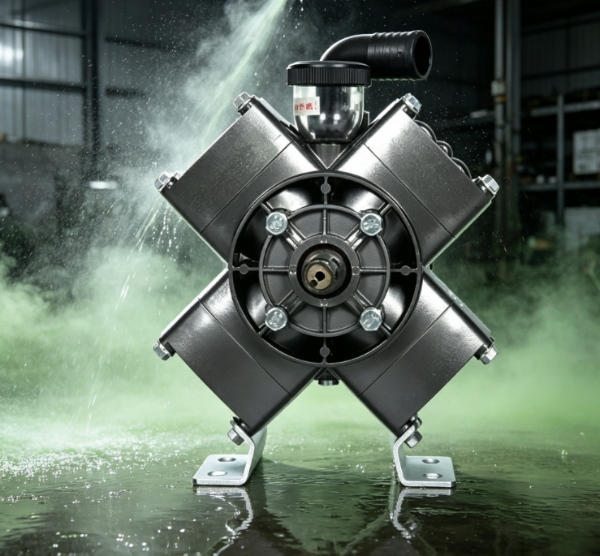
The pump is the part that connects these pieces.
For a backpack sprayer, the pump helps move liquid from the tank toward the spraying point. Its design can influence how the sprayer feels during use, how easily the liquid can be delivered, and how the equipment responds to different working conditions.
This is one reason diaphragm pumps have attracted attention in backpack sprayer applications. Their structure can support different spraying needs while allowing manufacturers to develop equipment for agricultural, gardening, and other outdoor applications.
Understanding the role of the diaphragm pump also helps explain why pump selection should not be separated from the rest of the sprayer design.
What Does a Diaphragm Pump Do in a Backpack Sprayer?
The basic role of a pump is to help move liquid.
When a user operates a backpack sprayer, liquid needs to travel from the tank through the hose and eventually reach the spray outlet. The pump creates the movement needed for this process.
A diaphragm pump uses a flexible diaphragm as part of its working structure. As the diaphragm moves, the internal space of the pump changes. This movement helps draw liquid into the pump and push it toward the outlet.
The process can be described in a simple way:
- Liquid enters the pump from the tank.
- Movement inside the pump draws the liquid into the working area.
- The liquid is pushed toward the outlet.
- The liquid travels through the hose.
- The spray handle and nozzle control the final application.
The pump is therefore not simply an additional component. It is part of the path that connects the stored liquid with the application point.
Its condition can affect the way the entire sprayer operates.
This is particularly relevant when the sprayer is used in places where the user needs to move around. A backpack sprayer is carried rather than fixed in one position. The equipment needs to work while the user changes location and direction.
A suitable pump helps support this type of mobile spraying work.
Why Is the Diaphragm Important to Pump Operation?
The diaphragm is a flexible part inside the pump. Its movement plays an important role in the transfer of liquid.
Unlike a simple rigid moving part, the diaphragm changes shape as the pump operates. This movement helps separate the liquid-handling area from other parts of the pump.
This structure can be useful in spraying applications because the pump may need to handle different working conditions.
The diaphragm can also be treated as a replaceable part in pump maintenance. When the pump is used repeatedly, internal components naturally receive attention during inspection and servicing.
Manufacturers therefore need to consider more than the shape of the diaphragm.
They may look at:
| Consideration | Why it matters |
|---|---|
| Diaphragm material | Needs to suit the intended liquid and working environment |
| Flexibility | Affects how the pump moves liquid |
| Durability | Influences maintenance needs |
| Sealing | Helps control liquid movement inside the pump |
| Compatibility | Needs to match the rest of the pump structure |
The diaphragm also shows why material selection is important.
A pump used for one application may face different conditions from a pump used somewhere else. The liquid, surrounding environment, cleaning habits, and frequency of use can all influence the choice of materials.
This makes the diaphragm an important part of the wider product design rather than an isolated internal component.
How Does a Diaphragm Pump Support Different Spraying Applications?
Backpack sprayers are used in more situations than many people realize.
Agricultural workers may use them around crops. Gardeners may use them for plant care. Outdoor workers may need portable spraying equipment for different maintenance tasks.
These applications can have different requirements.
Some jobs may involve short periods of spraying. Others may involve repeated movement across a larger working area. Some liquids may require greater attention to material compatibility. The equipment may also be used indoors, outdoors, or in partially protected environments.
A diaphragm pump can be incorporated into different sprayer designs to address these changing needs.
Common application areas can include:
- Crop care
- Garden maintenance
- Weed control
- Plant treatment
- Outdoor cleaning tasks
- General liquid application
The pump does not determine the entire application by itself. Tank design, hose arrangement, spray control, nozzle selection, and user handling also matter.
However, the pump provides an important connection between the stored liquid and the spraying system.
This is why manufacturers often consider the pump as part of the complete sprayer rather than selecting it independently.
What Makes Pump Compatibility Important?
A backpack sprayer is made from several connected parts. If one component does not work well with the others, the overall equipment may become less practical.
Pump compatibility is therefore an important consideration.
The pump needs to work with the tank, hose, valves, spray handle, and other components. The liquid path needs to remain coordinated from the moment the liquid leaves the tank until it reaches the spray outlet.
A useful way to look at this relationship is:
| Sprayer component | Connection with the pump |
|---|---|
| Tank | Provides the liquid supply |
| Pump | Moves the liquid |
| Hose | Carries liquid away from the pump |
| Spray handle | Gives the user control |
| Nozzle | Shapes the final spray |
| Sealing parts | Help contain the liquid |
If the pump is selected without considering these parts, the final sprayer may not provide the expected user experience.
For manufacturers, this means pump development can involve wider product planning.
A pump may need to fit within a certain sprayer structure. Its connection points may need to match other components. Materials may need to be considered together.
The same idea applies to buyers.
Rather than asking only whether a pump can move liquid, buyers can consider whether the complete pump-and-sprayer combination suits the intended application.
How Does a Diaphragm Pump Affect Sprayer Handling?
A backpack sprayer is carried on the user's body. This makes handling different from the use of stationary spraying equipment.
Weight distribution, hose movement, spray control, and pump operation can all affect the way the equipment feels during work.
The pump itself is only one part of this experience. Still, its design can influence how the liquid moves through the system and how the user interacts with the spray handle.
A well-planned sprayer needs to make the different components work together.
For example, the user may need to walk while spraying. The hose should remain manageable. The spray handle should be easy to control. The liquid should move through the system in a predictable way.
This creates a connection between pump design and user handling.
Manufacturers may therefore consider practical questions during product development:
- Where will the pump be positioned?
- How will it connect with the tank?
- How will the hose be arranged?
- How will the user operate the spray handle?
- How easy will the pump be to inspect?
- How will internal parts be accessed during maintenance?
These questions may seem simple, but they can influence the overall usability of the sprayer.
Why Does Material Selection Matter for a Diaphragm Pump?
Material selection is closely related to the liquid being handled.
A backpack sprayer may be used with different types of agricultural or gardening liquids. These substances can have different characteristics. The pump materials therefore need to be considered according to the intended application.
The main pump body is not the only area that matters.
The diaphragm, seals, valves, connections, and other internal or external parts may all need appropriate material choices.
Manufacturers can look at several factors when making these decisions:
- Type of liquid
- Contact between liquid and internal parts
- Surrounding environment
- Cleaning practices
- Frequency of use
- Expected maintenance conditions
- Compatibility between connected components
This approach helps prevent material selection from becoming a purely general decision.
The goal is not simply to use the same material in every application. Different working conditions can call for different choices.
For buyers, asking about material compatibility can therefore be useful when evaluating a diaphragm pump backpack sprayer.
A product intended for plant care may have different requirements from equipment designed for another type of liquid application.
How Are Manufacturers Improving Diaphragm Pump Backpack Sprayer Design?
Manufacturing is becoming more closely connected with application needs.
Instead of viewing the pump as a standard component that can be placed into any sprayer, manufacturers are paying more attention to how the pump fits within the complete product.
This can affect product development in several ways.
Design teams may review the relationship between the pump and tank. Production teams may focus on consistent component assembly. Inspection teams may check whether the finished pump works as intended.
Manufacturing can involve several connected stages:
| Stage | Main focus |
|---|---|
| Material preparation | Preparing suitable materials for production |
| Component production | Creating pump and sprayer parts |
| Assembly | Connecting individual components |
| Inspection | Checking appearance, fit, and function |
| Product preparation | Preparing the finished equipment for use |
The exact process can vary among manufacturers.
What matters is the connection between each stage.
A change in one component may affect another. A different application may require a different material choice. A change in sprayer structure may require changes to the pump arrangement.
This is why communication between design and production teams matters.
It also explains why buyers may find it useful to discuss their intended application before selecting a diaphragm pump backpack sprayer.
What Should Buyers Consider When Choosing a Diaphragm Pump Backpack Sprayer?
The pump is important, but it should not be the only consideration.
A backpack sprayer is a complete working system. Its value to the user depends on how its parts work together in the intended environment.
Buyers can begin with the application itself.
1. Consider the liquid
Think about what type of liquid will be handled and whether the pump materials are suitable for it.
2. Consider the working environment
Outdoor conditions, storage conditions, and cleaning routines can all affect equipment requirements.
3. Consider user handling
A backpack sprayer needs to be manageable while the user moves around. Tank position, hose arrangement, spray control, and pump placement can all matter.
4. Consider maintenance
The pump contains working parts that may eventually require inspection or replacement. Easy access can make routine maintenance more practical.
5. Consider system compatibility
The pump, tank, hose, valves, handle, and nozzle need to function as a connected system.
6. Consider manufacturing support
For buyers with particular application needs, communication with the manufacturer can help clarify whether the available product configuration matches the intended use.
This approach shifts attention away from one isolated component.
A pump may look suitable when viewed on its own. The more useful question is whether it fits the complete spraying task.
As agricultural and outdoor applications continue to vary, this application-based approach is becoming more relevant to both manufacturers and buyers.
The diaphragm pump remains a relatively compact part of the backpack sprayer, but its position in the liquid path gives it an important role. Its structure, materials, compatibility, maintenance needs, and relationship with other components can all influence how the equipment functions during everyday spraying work.
 Previous