

 EN
EN  English
 中文简体
中文简体 русский
Across workshops, construction sites, and renovation spaces, paint application methods continue to shift in subtle ways. Tools are becoming more refined, yet many still rely on simple mechanical ideas. The diaphragm paint sprayer is one such example. It does not rely on complicated internal structures. Instead, it uses controlled movement and pressure to move paint in a steady flow.
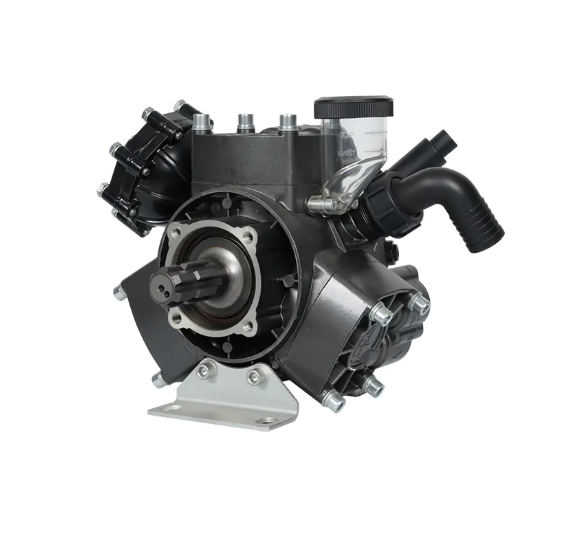
People often focus on the visible result. A smooth wall. A consistent layer. Clean edges. What happens inside the machine, however, is where the real story begins. The working process is quiet but continuous. Each cycle contributes to the final surface finish.
What Is Happening Inside the Machine?
At the center of the system is a chamber with a flexible diaphragm. This diaphragm is not rigid. It moves back and forth in a controlled pattern. That movement changes the size of the internal space.
When the diaphragm pulls away, the space grows. When it pushes forward, the space shrinks. These changes in volume directly affect pressure. Pressure then controls how paint moves.
There are also simple valve structures. One valve allows paint to enter the chamber. Another allows it to exit. These valves respond to pressure differences rather than manual control.
The internal design may seem minimal, but each part plays a clear role. Movement creates pressure. Pressure drives flow. Flow leads to spray.
How Does the Movement Begin?
The diaphragm does not move on its own. It is driven by a mechanical force. This force may come from a motor or a similar power source. The motion is repeated in cycles.
Each cycle has two main stages:
- Expansion phase
- Compression phase
During expansion, the diaphragm moves outward. The internal chamber becomes larger. This creates a low-pressure environment. Paint is then drawn into the chamber through the inlet valve.
During compression, the diaphragm moves inward. The chamber becomes smaller. Pressure builds. The paint is pushed out through the outlet valve.
This process repeats rapidly. Even though each cycle is small, the repetition creates a steady stream of paint.
Why Does Pressure Control Everything?
Pressure pushes all fluid inside the spraying setup. If there's no difference in pressure levels, paint won't flow at all.
Liquid paint will rush toward low-pressure spaces inside the chamber. Higher pressure, on the other hand, forces the liquid to move outward. This basic rule works for every part of the whole unit.
The spray machine keeps pressure balanced the whole time. It prevents big up-and-down swings in pressure to keep output consistent.
Steady pressure delivers much cleaner coating results. It stops uneven spraying, sudden heavy bursts or blank spots on surfaces.
How Does Paint Travel After Leaving the Pump?
Paint flows straight into a flexible hose once it leaves the pump chamber, heading all the way to the spray gun with few blockages along the route.
Pressure stays consistent inside the hose the entire time, so paint moves forward without slowdowns or stalls.
When paint reaches the spray gun head, it goes through a tiny nozzle opening that reshapes the flow. As liquid squeezes through this small hole, it splits into tiny fine droplets.
This shift from thick liquid stream to mist is critical for good coating. A thick solid stream cannot spread evenly over surfaces, while fine droplets create an even, controllable spray layer.
What Influences the Spray Pattern?
The spray pattern is affected by several simple factors:
- The size of the opening at the tip
- The pressure level inside the system
- The movement speed of the sprayer
A narrow opening creates a tighter pattern. A wider opening spreads the paint over a larger area.
Pressure also plays a role. Higher pressure can produce finer droplets. Lower pressure may result in a heavier flow.
User movement adds another layer. A steady hand creates a consistent layer. Uneven movement can lead to variation.
These elements work together rather than separately. Small adjustments can change how the final surface looks.
How Does the Diaphragm Handle Repeated Motion?
The diaphragm keeps flexing back and forth the whole time the machine runs, cycling thousands of times nonstop. It has to stay pliable to stand up to all this constant movement.
It acts as a divider between mechanical parts and paint liquid, so coating fluid never touches the machine's inner mechanics directly. This cuts down abrasion damage brought on by paint materials.
Even so, constant flex puts strain on the diaphragm. After long hours of work, it gradually loses softness. This messes with the chamber's volume shifts and weakens pressure generation.
Checking this component routinely catches wear issues early. Taking good care of it lets the equipment run reliably for longer.
How Does the System Stay Stable During Use?
All those rapid internal pumping cycles don't lead to choppy spray output, since the cycles happen extremely fast. Separate pressure pulses merge to form a uniform, uninterrupted paint stream.
The whole setup runs on a fixed, steady cycle rhythm. Every pumping motion follows the last one without lag, which keeps spray output from cutting out randomly.
Balanced inflow and outflow also keeps operations stable. Valves react right away to any pressure shifts, opening and closing automatically at the exact right timing with no manual control needed.
This instant, self-regulating valve response ensures consistent working conditions all through operation.
What Happens When Paint Is Thicker or Thinner?
Various paint coatings carry different flow traits; some slide through lines effortlessly, while others move sluggishly under pressure.
Thin paint moves fast and reacts immediately to pressure adjustments, delivering smooth spray with little pumping resistance.
Thick coatings need more pushing force to circulate. The diaphragm still builds up necessary pressure, but the paint moves slower, and the system compensates by running more pumping cycles.
This equipment doesn't need complicated internal tweaks to switch coating types. Its steady repetitive pumping motion works with nearly all paint viscosities.
Operators might spot minor shifts in spray texture based on paint thickness, yet the core pumping and spraying process stays unchanged.
How Does This Design Affect Cleaning?
Regular cleaning keeps the spray gear working well. Leftover paint will harden inside hoses, valves and nozzles if you leave them uncleaned.
This machine has a straightforward layout, so it's easy to wash out. It doesn't have lots of hidden nooks where paint gets stuck like more complicated equipment.
Most operators run cleaning fluid through the whole setup after every job. This washes away leftover paint and stops thick residue from building up.
You'll need to focus on these main spots when cleaning:
- Spray nozzle
- Inside of the delivery hose
- Valve gaps and passages
If you keep these parts free of dried paint, paint will flow evenly the next time you operate the machine.
What Makes the Flow Appear Continuous?
Although the internal process is based on cycles, the output looks steady. This is because the cycles occur at a high frequency.
Each small pulse of paint follows the previous one almost immediately. The gaps between pulses are too small to notice.
As a result, the spray appears continuous. The surface receives an even layer without visible interruption.
This blending effect is one of the reasons the system works well in practical settings.
How Do Users Interact With the System?
From the outside, operation feels simple. The user controls when the sprayer runs and how it is directed.
The internal process continues automatically. The diaphragm moves. Pressure changes. Paint flows.
User control focuses on:
- Positioning the spray gun
- Adjusting distance from the surface
- Moving at a steady pace
These actions influence how the paint is applied. The internal mechanism supports the process but does not require constant adjustment.
How Does the System Respond to Long Use Periods?
During extended use, the system continues its repetitive motion. The diaphragm keeps moving. The valves keep opening and closing.
Consistency becomes important over time. Small changes in pressure or flow can become noticeable if they continue.
Regular pauses can help maintain stable performance. Checking the system during use ensures that everything continues to function smoothly.
Long operation does not change the basic working principle. The same cycle repeats from start to finish.
Why Is the Separation of Parts Important?
One key feature of this design is the separation between the driving mechanism and the paint.
The diaphragm acts as a barrier. On one side, there is mechanical movement. On the other side, there is liquid flow.
This separation reduces direct interaction between moving parts and paint. It helps limit wear caused by abrasive materials.
It also keeps the internal structure simpler. Each side performs its own function without interference.
How Does It Compare in Practical Settings?
In practical use, the diaphragm paint sprayer is often chosen for its straightforward operation. The mechanism is easy to understand. The flow is predictable.
Users do not need to manage complex internal systems. The machine handles the movement and pressure automatically.
This simplicity supports consistent results in many environments. It allows users to focus more on application rather than adjustment.
What Role Do Valves Play in the Cycle?
The valves control direction. Without them, paint would move back and forth without leaving the chamber.
The inlet valve opens when pressure inside the chamber drops. It allows paint to enter.
The outlet valve opens when pressure rises. It allows paint to exit.
These actions are automatic. The valves respond to pressure differences rather than external control.
Their timing is critical. They must open and close at the right moments to maintain flow.
How Does Temperature or Environment Affect Operation?
External conditions can influence how paint behaves. Temperature may affect thickness. Air conditions may affect drying speed.
Inside the sprayer, the basic process remains stable. The diaphragm continues its motion. Pressure continues to drive flow.
However, changes in paint behavior can affect how smoothly it moves through the system.
Users may notice slight differences in spray feel or coverage, depending on conditions.
How Does the System Support Even Coverage?
Even coverage depends on a combination of factors:
- Consistent pressure
- Stable flow
- Controlled spray pattern
- Steady user movement
The diaphragm system supports these elements by maintaining a regular pumping cycle.
The rapid repetition of motion helps smooth out variations. The spray remains steady as long as the system continues its rhythm.
This allows surfaces to receive a more uniform layer of paint.
What Should Be Observed During Operation?
While using the sprayer, certain signs can indicate how well it is performing:
- A steady spray without gaps
- Smooth sound from the internal motion
- No sudden changes in flow
If the spray becomes uneven, it may suggest a blockage or wear in one of the parts.
Observing these details helps maintain consistent results.
How Does the Internal Rhythm Shape the Final Result?
The entire process is built on rhythm. The diaphragm moves. Pressure shifts. Valves respond. Paint flows.
This rhythm repeats without interruption. Each cycle adds a small amount of paint to the overall output.
Over time, these small contributions form a continuous spray. The surface is covered layer by layer.
The internal motion is not visible, yet it defines the final appearance.
Why Does the System Feel Predictable?
Predictability comes from repetition. The same cycle happens again and again with little variation.
Once the system reaches a steady state, it maintains that pattern. This reduces surprises during use.
Users can adjust their movement based on this consistency. They learn how the spray behaves and adapt their technique.
The machine becomes part of a controlled process rather than an unpredictable tool.
 Previous