

 EN
EN  English
 中文简体
中文简体 русский
Industrial coating work often happens under pressure. Large surfaces need coverage in limited time. Materials vary from light finishes to thick protective layers. Work environments can be dusty, humid, or exposed to constant vibration. In this setting, equipment is not only a tool. It becomes part of the workflow rhythm.
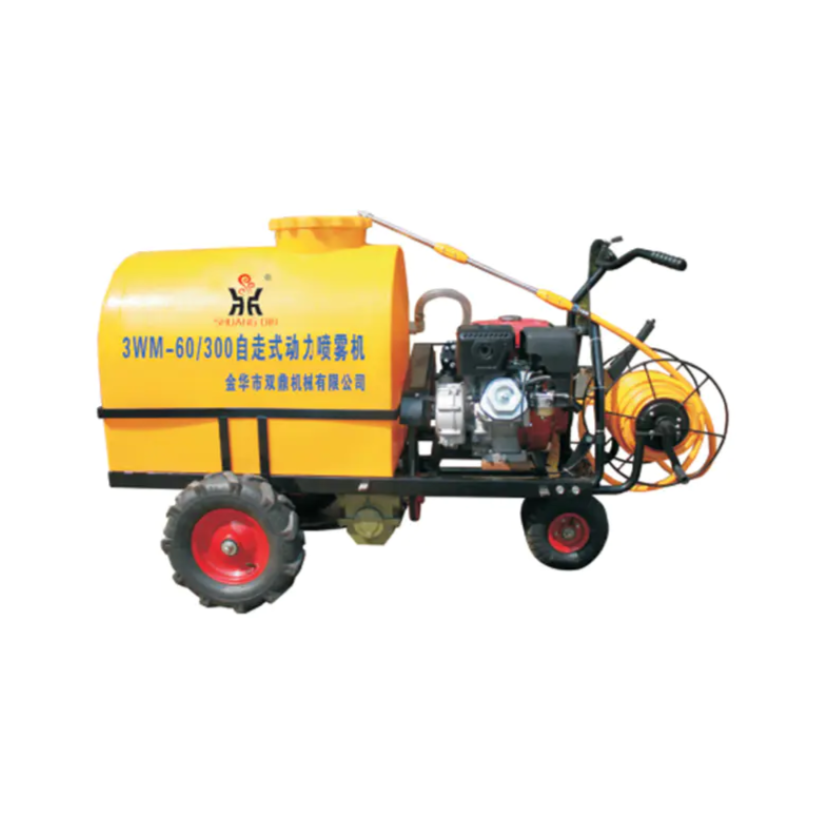
A diaphragm airless paint sprayer is often placed in this conversation. It is designed to move coating material without relying on external air mixing. Instead, pressure and internal motion drive the spray process. This creates a steady output that many industrial users find practical for continuous work.
The question of suitability is not simple. Heavy-duty use is not defined by one factor. It includes workload intensity, material type, and environmental stress. Each of these areas tests the limits of any spraying system.
What Defines Heavy-Duty Industrial Use in Real Practice?
Heavy-duty use is not only about size or scale. It is about repetition, endurance, and consistency under stress.
In real working conditions, this often includes:
- Continuous spraying across large structures
- Frequent material changes within the same shift
- Surfaces with uneven texture or exposure to weather
- Environments with dust, moisture, or temperature shifts
- Equipment running for long operational cycles
These conditions place pressure on every part of a spraying system. Flow stability becomes important. So does resistance to clogging or interruption.
A sprayer used in this setting must do more than apply coating. It must maintain a steady rhythm even when conditions shift. That expectation is what separates light use from heavy-duty application.
How Does a Diaphragm Airless Paint Sprayer Operate in Simple Terms?
The working principle is based on movement and pressure control. Inside the system, a flexible component moves back and forth. This motion draws coating material in and pushes it outward.
The spray is created without mixing air into the coating stream. This leads to a direct application process. The material reaches the surface in a continuous flow.
This structure creates a few noticeable behaviors:
- Output remains steady over time
- Flow responds smoothly to material changes
- Movement inside the system is consistent rather than sudden
- Coating transfer feels controlled rather than scattered
The simplicity of movement is part of its appeal in industrial environments. Fewer complex motion changes can mean fewer disruptions during operation.
Can It Handle Continuous Operation Without Losing Stability?
Continuous operation is one of the main expectations in heavy-duty environments. A system may need to run for long periods without interruption.
A diaphragm airless paint sprayer is often used in such conditions because its internal movement is steady. The pumping action does not rely on sudden shifts. This helps maintain a consistent spray output over time.
However, stability depends on several practical factors:
- Clean internal pathways
- Proper material consistency
- Controlled operating speed
- Stable power or driving force
When these conditions are balanced, the sprayer can maintain a predictable output. When they are not, fluctuations may appear in the spray pattern.
Heavy-duty use is not only about capability. It is also about maintaining conditions that support stable operation.
How Does It Respond to Thick and Demanding Coatings?
Industrial coatings are not always smooth or light. Some are designed for protection. Others are built for durability or surface reinforcement. These materials often behave differently when under pressure.
A diaphragm airless system can generally handle thicker coatings because its motion creates steady pressure build-up. The coating is pushed rather than pulled through the system. This helps move materials that would otherwise resist flow.
Still, thicker coatings introduce certain challenges:
- Slower movement through the system
- Higher resistance during application
- Greater sensitivity to buildup over time
The sprayer responds better when the coating remains consistent. Sudden changes in thickness can affect output balance. This is why preparation of materials often plays a quiet but important role in heavy-duty use.
Does Surface Type Affect Performance in Industrial Environments?
Surface condition changes how coating behaves after it leaves the sprayer. In heavy-duty work, surfaces are rarely uniform. Some are rough, some are structured, and others may already carry old layers.
The sprayer does not change the surface. It only delivers the coating. However, surface type influences how the coating spreads and settles.
Common industrial surface conditions include:
| Surface Condition | Impact on Application |
|---|---|
| Smooth metal | Even coverage, predictable flow |
| Rough concrete | Higher absorption, varied finish |
| Outdoor structures | Exposure to environmental variation |
| Layered surfaces | Irregular absorption behavior |
A diaphragm airless system supports these variations through steady output. The consistency of spray helps reduce uneven build-up, especially on surfaces that already vary in texture.
How Important Is Flow Consistency in Heavy-Duty Work?
Flow consistency is often the difference between controlled application and uneven coating results.
In heavy-duty environments, inconsistency can find to:
- Uneven surface coverage
- Visible layering differences
- Increased material waste
- Additional rework time
A diaphragm airless sprayer helps reduce these issues by maintaining a steady internal motion. The coating is pushed in a continuous stream rather than broken bursts.
This does not remove the need for operator attention. Movement speed, distance from surface, and angle still influence final results. But a stable flow provides a more predictable base to work from.
Can It Adapt to Changing Work Environments?
Industrial environments rarely stay the same. A project may start indoors and move outdoors. Conditions may shift during the day. Equipment must adjust without losing function.
A diaphragm airless sprayer is often used in this type of changing environment because it does not rely on fragile external mixing conditions. Its internal motion continues regardless of external airflow or minor environmental changes.
However, adaptation still depends on:
- Proper placement of equipment
- Protection from exposure
- Consistent maintenance routines
- Adjustments in spraying technique
The system provides stability, but the environment still shapes the final outcome.
What Role Does Maintenance Play in Long-Term Use?
Maintenance becomes more important as workload increases. Heavy-duty use places continuous stress on internal movement and flow paths.
In practical terms, maintenance focuses on:
- Removing coating residue after use
- Checking for flow irregularities
- Keeping internal movement smooth
- Ensuring no buildup affects material passage
Even small amounts of residue can influence performance over time. In heavy-duty conditions, this effect becomes more noticeable.
A clean system tends to respond more predictably. A neglected one may show uneven flow or reduced efficiency during operation.
Maintenance is not a separate task. It is part of keeping the system ready for continuous use.
How Does It Compare in High-Pressure Industrial Workflows?
Industrial workflows often require coordination between speed and precision. Equipment must keep pace with production without sacrificing surface quality.
A diaphragm airless sprayer fits into this environment through steady delivery rather than rapid variation. It does not rely on sudden output changes. Instead, it maintains a continuous spray pattern.
This behavior creates certain workflow advantages:
- Easier control during long runs
- Reduced interruption between coating stages
- More predictable material usage
- Stable output across repeated tasks
At the same time, it requires attention to pacing. Heavy-duty use is not only about output strength. It is also about matching that output to the workflow rhythm.
Is It Reliable Under Constant Industrial Pressure?
Reliability in industrial settings is not a single condition. It is a combination of consistency, durability, and adaptability under ongoing stress.
A diaphragm airless paint sprayer supports these needs through:
- Steady internal motion
- Continuous coating delivery
- Ability to handle varied materials
- Adaptation to different surface conditions
Still, reliability is influenced by how it is used. Operation habits, maintenance routine, and environmental control all shape long-term behavior.
Heavy-duty environments test equipment over time. A system that performs steadily under these conditions is valued not only for its function, but for its predictability during demanding work cycles.
 Previous