

 EN
EN  English
 中文简体
中文简体 русский
Moving liquid from one place to another sounds straightforward enough on paper, but a lot of industrial processes demand more than some ordinary transfer method can offer. The fluid might need to travel a longer path, enter equipment under real pressure, or move through a system that calls for controlled, repeated pumping cycles rather than a single steady push.
This is exactly where a high pressure diaphragm pump earns its place in the equipment lineup. It relies on a flexible diaphragm to create the movement needed to draw fluid in and push it back out toward the outlet.
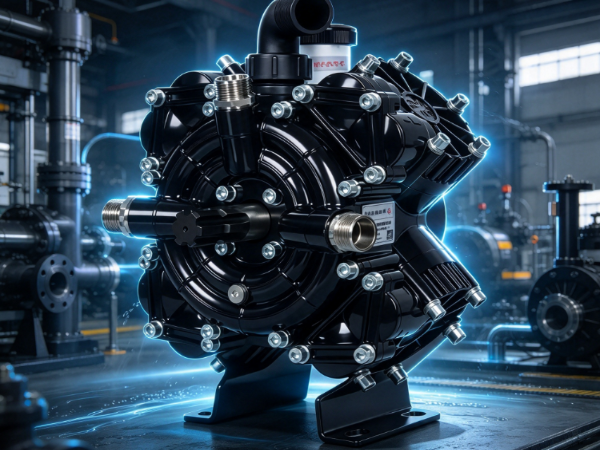
The working idea itself is fairly easy to picture. The diaphragm moves back and forth inside the pump, and that motion changes how much space is available for the fluid at any given moment. As the space grows, fluid gets drawn in. As the space shrinks, that fluid gets pushed toward the discharge side.
The pump turns up across different applications precisely because its operating principle doesn't lock itself to one particular industry. Agricultural spraying, industrial fluid transfer, water handling, cleaning equipment, and plenty of other setups can all call for this exact kind of pumping action.
Getting a real feel for how the pump works helps manufacturers, equipment designers, and buyers figure out whether it actually fits a given fluid handling system.
What Is a High Pressure Diaphragm Pump?
A High Pressure Diaphragm Pump is a type of pump that uses a flexible diaphragm to move fluid through a system.
The diaphragm separates the fluid area from the mechanical movement used to operate the pump. This arrangement allows the pumping action to take place without requiring the driving mechanism to come directly into contact with the fluid.
The diaphragm moves between two positions. One movement creates space inside the fluid chamber. This allows fluid to enter. The opposite movement reduces the available space and pushes the fluid toward the outlet.
Valves within the pump help guide the direction of fluid movement. They allow fluid to enter through the inlet and leave through the discharge path.
A simple way to understand the process is:
- The diaphragm moves and creates suction.
- Fluid enters the pump chamber.
- The diaphragm changes direction.
- The chamber becomes smaller.
- Fluid moves toward the outlet.
- The process repeats.
This repeated movement creates a continuous pumping process while the pump is operating.
The "high pressure" description relates to the pump's ability to support applications where fluid needs to be delivered under a higher pressure condition than ordinary low-pressure transfer tasks.
The actual suitability of a pump depends on the application, fluid, system design, and equipment requirements.
How Does the Diaphragm Create Pumping Action?
The diaphragm is really the central moving part driving this whole process.
It's a flexible barrier that changes the volume of the pumping chamber as it moves back and forth. That shift in chamber volume is what creates the basic suction and discharge actions underlying everything else.
When the diaphragm moves in one direction, the space inside the chamber grows larger. That creates a pressure difference that pulls fluid in through the inlet.
When the diaphragm swings back, the available space shrinks. The fluid then gets pushed toward the discharge side as a result.
Think of it like a flexible chamber repeatedly expanding and contracting, almost breathing in and out.
The key thing to understand is that the diaphragm isn't simply shoving fluid in one direction the whole time. Its repeated back-and-forth motion creates two connected stages working together: intake, then discharge.
| Diaphragm Movement | What Happens |
|---|---|
| Moves outward | Pumping chamber expands |
| Chamber expands | Fluid enters |
| Moves inward | Pumping chamber contracts |
| Chamber contracts | Fluid moves toward outlet |
| Movement repeats | Pumping continues |
The diaphragm's movement is created by a driving mechanism. Depending on the pump design, this may involve different mechanical arrangements.
The exact internal design can vary between pump models. However, the basic principle remains based on changing the chamber volume through diaphragm movement.
This simple concept is one reason diaphragm pumps can be adapted to different equipment designs.
How Does Fluid Move Through the Pump?
Fluid movement depends on the coordinated action of the diaphragm and internal valves.
The inlet valve controls fluid entering the pump. The outlet valve controls fluid leaving it. Their operation follows the movement of the diaphragm.
When the diaphragm creates suction, the inlet side opens to allow fluid into the chamber. The outlet side remains closed so that fluid does not move backward.
When the diaphragm changes direction, the inlet side closes while the outlet side allows fluid to move out.
This creates a controlled path through the pump.
The basic flow can be represented as:
Fluid source → Inlet → Pump chamber → Outlet → Delivery system
The fluid does not simply move freely through the pump. The internal valve arrangement helps maintain the intended direction.
This is particularly useful when the pump is part of a larger system. The pump needs to receive fluid from one location and deliver it to another without creating unwanted reverse movement.
Different fluids may require different pump designs and material choices. Water, oil-based fluids, chemical solutions, agricultural liquids, and other substances can have different handling requirements.
For this reason, a diaphragm pump should always be selected with the actual fluid application in mind.
Why Is a Diaphragm Pump Suitable for High Pressure Applications?
Some fluid handling systems need a lot more than basic movement from point A to point B. The fluid might need to travel through a delivery line, reach spraying equipment, or enter another part of a process under real pressure.
A high pressure diaphragm pump gets built around exactly this kind of requirement from the ground up.
The diaphragm's pumping action repeatedly moves fluid into the chamber and then back out toward the discharge side. The pump's overall construction supports whatever pressure conditions the intended application actually calls for.
The separation the diaphragm creates matters here too. The mechanical drive never needs direct exposure to the fluid being pumped.
That separation pays off in applications where the fluid genuinely needs to stay within a tightly controlled path throughout the process.
High pressure pumping tends to show up in agricultural spraying, industrial spraying, cleaning equipment, general fluid transfer, water handling, filtration systems, process equipment, and anywhere else that needs pressurized fluid delivery as part of normal operation.
The pump's job isn't simply cranking out pressure for its own sake. It needs to move fluid in a controlled way while working smoothly alongside the rest of the system around it.
The piping, hoses, valves, spray equipment, filters, and other components all shape how the complete system ultimately performs together.
Where Are High Pressure Diaphragm Pumps Commonly Used?
High Pressure Diaphragm Pumps can be used in many applications where pressurized fluid movement is needed.
Agriculture is one familiar area. Spraying equipment needs to move liquid from a storage tank toward spray components. A diaphragm pump can provide the pumping action required for this process.
Industrial equipment may also use these pumps for fluid transfer or spraying. The exact application depends on the type of equipment and the fluid being handled.
Cleaning systems can require pressurized water or cleaning fluid to reach a particular surface. A pump can support the movement of that fluid from its source to the cleaning equipment.
Water treatment and filtration equipment may also require controlled fluid movement between different sections of a system.
| Application | Possible Pump Role |
|---|---|
| Agricultural spraying | Moves liquid toward spraying equipment |
| Industrial spraying | Supports pressurized fluid delivery |
| Cleaning equipment | Moves cleaning fluid through the system |
| Water handling | Transfers water between system sections |
| Filtration systems | Supports fluid movement through equipment |
| Industrial processing | Moves suitable fluids between process stages |
| Equipment systems | Provides controlled fluid delivery |
The application determines what type of diaphragm pump is appropriate.
A pump used in agricultural equipment may have different requirements from one used in industrial processing. The fluid, operating environment, installation space, and surrounding equipment all need to be considered.
Can a High Pressure Diaphragm Pump Handle Different Fluids?
A diaphragm pump can be used with different types of fluids, but the pump must be suitable for the particular fluid.
Fluid characteristics can affect the choice of diaphragm material, pump body material, valves, seals, and other components.
For example, a pump handling clean water may have different requirements from a pump handling an oil-based liquid or an agricultural formulation.
The physical properties of the fluid also matter. A fluid may be thin and easy to move, or it may be thicker and require a different pumping arrangement.
Some applications may also contain particles or suspended material. In such cases, the pump design needs to match the fluid and the system conditions.
Buyers should provide clear information about the fluid before selecting a pump.
Useful information can include:
- What type of fluid will be pumped?
- Where will the fluid come from?
- Where does the fluid need to go?
- Is the fluid clean or does it contain particles?
- Will the pump be used continuously or intermittently?
- What equipment will be connected to the pump?
- Is the pump intended for spraying, transfer, cleaning, or another purpose?
Clear application information allows the manufacturer or supplier to recommend a more suitable product.
How Should a High Pressure Diaphragm Pump Be Integrated Into a System?
A pump does not operate alone. It is part of a larger fluid handling system.
The inlet side needs to connect properly with the fluid source. The discharge side needs to connect with the delivery equipment. Other components may include hoses, pipes, filters, valves, tanks, spray nozzles, or control devices.
The relationship between these components can affect the overall operation.
A poor connection arrangement may restrict fluid movement. An unsuitable hose or pipe may affect delivery. A filter may need to be positioned so that it supports the pump rather than interfering with fluid supply.
Installation space also matters. The pump needs to be positioned where it can be accessed for inspection and maintenance.
Manufacturers and equipment designers can consider several areas when integrating the pump:
| Consideration | Why It Matters |
|---|---|
| Fluid source | Ensures the pump receives fluid properly |
| Inlet arrangement | Supports steady fluid entry |
| Outlet arrangement | Connects the pump with the delivery system |
| Hoses and pipes | Provide the fluid path |
| Filters | Help manage unwanted particles |
| Valves | Support control of fluid movement |
| Equipment position | Allows practical operation and maintenance |
The complete system should be considered before installation.
A pump that is suitable on its own may not perform as expected if the surrounding components do not match the application.
What Should Buyers Consider When Choosing a High Pressure Diaphragm Pump?
Choosing a pump starts with understanding the job it needs to perform.
Buyers can begin by identifying the fluid, application, and equipment arrangement. This gives the supplier a clear picture of the required pumping function.
The intended use should also be specific. A pump for agricultural spraying may have different requirements from a pump for industrial fluid transfer.
Buyers can consider the following areas:
- Application: What will the pump be used for?
- Fluid: What type of liquid will pass through it?
- Installation: Where will the pump be placed?
- Connections: How will it connect to the existing system?
- Operation: How often and under what conditions will it run?
- Maintenance: How easily can the pump be inspected and serviced?
- Customization: Are any changes needed to fit the equipment?
Working with a manufacturer or supplier can be useful when the application has special requirements. Buyers can provide drawings, product samples, equipment information, or a description of the intended use.
Questions for a supplier may include:
- Can the pump be used for the intended fluid?
- Is the pump suitable for spraying or transfer?
- How is the diaphragm selected for the application?
- What information is needed for product selection?
- Can the pump be adapted to the existing equipment?
- How are samples handled during product development?
- How does the supplier check product consistency?
- What support is available after the product is selected?
The answers can help buyers understand whether the pump fits their system rather than simply choosing a product based on its name.
For manufacturers, the same approach can also support product development. When the pump, fluid, piping, and end-use equipment are considered together, it becomes easier to identify the role that a High Pressure Diaphragm Pump needs to play within the complete system.
 Previous