

 EN
EN  English
 中文简体
中文简体 русский
Agricultural spraying is not simply about applying a liquid to crops. A complete spraying system needs to move the liquid from one place to another and deliver it in a controlled way. Different parts of the system have different roles, and each part needs to work with the others.
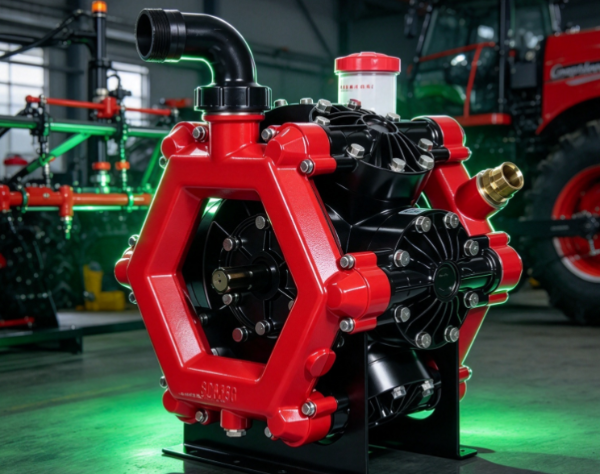
The Crop Sprayer Pump is an important part of this process. It helps move liquid from the tank toward the spraying side of the equipment. Without this movement, the other parts of the system cannot perform their intended roles.
For farmers and agricultural equipment buyers, understanding where the pump fits can make product selection easier. It also helps explain why different spraying systems may use different pump arrangements.
What Is the Role of a Crop Sprayer Pump?
A crop sprayer pump can be viewed as the part that helps create movement within a spraying system. The liquid is stored in a tank, but storage alone does not move it toward the crop. The pump helps transfer the liquid through the system so that it can reach the delivery area.
This role connects several parts of the equipment.
A typical spraying system may include:
| System Part | Main Role |
|---|---|
| Tank | Holds the spraying liquid |
| Crop Sprayer Pump | Moves liquid through the system |
| Pipes or Hoses | Carry liquid between different parts |
| Control Parts | Help manage liquid movement |
| Spray Nozzles | Deliver liquid toward the crop |
| Supporting Structure | Holds or connects the equipment |
The pump therefore sits between storage and delivery. Its position may vary depending on equipment design, but its basic purpose remains related to liquid movement.
This makes the pump more than an individual component. It is part of the connection between the liquid supply and the final spraying process.
How Does a Crop Sprayer Pump Fit Between the Tank and Spray Nozzles?
The relationship between the tank, pump, and nozzles is easy to understand when the spraying process is viewed as a continuous path.
The liquid begins in the tank. From there, it needs to move into the rest of the system. The pump supports this movement. The liquid then travels through connected pipes or hoses before reaching the spray nozzles.
The basic flow can be described as:
Tank → Pump → Pipes or Hoses → Control Parts → Spray Nozzles → Crop
This simple structure explains why pump placement matters.
If the pump is part of the system that moves liquid away from the tank, it becomes a central link in the spraying process. The pipes and hoses provide a route, while the nozzles provide the final delivery point.
The exact arrangement can differ between machines. Some systems may have additional components between these stages. Others may combine certain functions into a more compact structure.
Even with these differences, the pump remains closely connected to the movement of liquid from storage toward application.
For equipment buyers, looking at the whole system can therefore be more useful than considering the pump alone. A pump needs to fit the way the rest of the equipment is designed.
Why Does the Pump's Position Matter in a Spraying System?
The position of a pump affects how it connects with other parts of the equipment.
A spraying system needs a clear route for liquid movement. If the pump is selected without considering the tank, hoses, controls, and spray nozzles, the overall system may not work as expected.
This is why agricultural equipment selection often involves more than looking at an individual product description.
The pump needs to match the intended system structure. Buyers may need to consider:
- How the liquid enters the pump.
- Where the pump sends the liquid.
- How the pump connects with the existing equipment.
- What type of spraying work the equipment is designed to handle.
- How the pump fits into the available space.
- How easily the pump can be accessed during routine maintenance.
These considerations are especially relevant when a pump is being replaced.
A replacement pump is not simply another pump added to the system. It needs to work with the existing arrangement. Connection points, equipment layout, and operating habits can all affect the selection.
For new equipment, the situation is somewhat different. The pump can be considered as part of the overall design from the beginning. This gives equipment manufacturers and buyers more room to think about how each component will interact.
How Does Liquid Move Through the Spraying Equipment?
The spraying process starts with liquid stored inside the tank. When the equipment is used, the liquid needs to leave the tank and enter the moving path.
The Crop Sprayer Pump supports this stage.
Once the liquid enters the pump, it can continue through the connected parts of the spraying system. Pipes and hoses guide the liquid toward the spray area. Control components can help manage where the liquid travels. The nozzles then provide the final point of delivery.
This process can seem simple from the outside. However, several parts need to work together.
Consider a sprayer used across different crop areas. The operator may move the equipment from one section of a field to another. The spraying system needs to continue moving liquid while the equipment is in use.
This is where the relationship between the pump and the rest of the system becomes important.
The pump does not determine the entire spraying process by itself. It supports one part of a larger chain. The tank provides the supply. The pump supports movement. The connected components guide the liquid. The nozzles deliver it.
Each stage has a different purpose.
Understanding this relationship can help buyers avoid treating the pump as an isolated product. A suitable pump should make sense within the complete spraying arrangement.
What Factors Influence Crop Sprayer Pump Selection?
Different farms may use different spraying equipment. A small agricultural operation may have different needs from a larger operation. Crop types, field layouts, spraying habits, and equipment designs can also vary.
This creates demand for different pump options.
When choosing a Crop Sprayer Pump, buyers can look at several practical aspects.
Application
The intended spraying task is an important starting point. A pump used in one type of agricultural equipment may not be the natural choice for another.
Understanding the application helps narrow the available options.
System Layout
The physical arrangement of the equipment also matters. The pump needs to connect naturally with the tank, hoses, control parts, and delivery system.
A pump that does not fit the existing layout may create unnecessary installation work.
Equipment Compatibility
Compatibility is another practical concern. Buyers need to consider whether the pump works with the rest of the spraying equipment.
This becomes particularly important for replacement purchases. The goal is not simply to obtain a new pump. The goal is to maintain a workable spraying system.
Maintenance Access
A pump is part of equipment that may be used repeatedly. Easy access can make inspection and routine care more convenient.
A product that fits the system but is difficult to reach may create challenges during regular use.
Product Variety
Different spraying systems create different requirements. This is why suppliers may offer several pump designs or product categories.
A wider range can give agricultural equipment buyers more ways to match a pump with their existing system.
Can One Crop Sprayer Pump Fit Every Spraying System?
Not necessarily.
Agricultural spraying equipment is used in many different settings. Equipment structure can vary according to the type of operation, the available space, and the intended spraying work.
A pump that fits one arrangement may not fit another.
This does not mean that every spraying system needs a completely different solution. It means that buyers should look at the complete equipment structure before making a selection.
For example, two sprayers may both contain a tank, pump, hoses, and nozzles. Their internal layouts can still be different.
One system may prioritize compact equipment. Another may be designed around a different spraying setup. A replacement project may also need to work around an existing structure.
This is why product variety has a practical role in the agricultural equipment market.
Rather than asking whether one pump can serve every situation, buyers can ask a more useful question: Which pump fits the spraying system already in use?
That change in perspective can make product selection more straightforward.
How Can Buyers Understand the Pump's Place Before Purchasing?
A simple way to approach the selection process is to follow the liquid path through the equipment.
Start with the tank.
Where does the liquid leave the tank? Where is the pump located? What does it connect to? Where does the liquid go after leaving the pump? How does it eventually reach the spray nozzles?
These questions create a basic picture of the system.
Buyers can then examine the pump in relation to that picture.
A practical checklist may include:
- Identify the spraying application. Understand what type of agricultural work the equipment will support.
- Review the existing system. Look at the tank, liquid path, connections, hoses, controls, and nozzles.
- Check the pump position. Determine where the pump sits within the overall equipment structure.
- Consider installation and access. Make sure the selected product can be installed and reached for routine care.
- Compare suitable options. Look at products that match the intended spraying arrangement rather than choosing based on the pump alone.
This approach can also help equipment manufacturers communicate product information more clearly.
Instead of describing a pump as an isolated component, product information can explain where it fits and what type of spraying equipment it is intended to support.
Could Crop Sprayer Pump Variety Change Agricultural Equipment Choices?
Agricultural equipment is becoming more varied in its design and application. Farmers may work with different field conditions, crop arrangements, and spraying routines.
As equipment changes, the role of supporting components also becomes more noticeable.
Crop Sprayer Pumps are part of this wider equipment structure. Different pump options can give manufacturers more flexibility when designing spraying systems. They can also give buyers more choices when replacing or updating equipment components.
This does not mean that product variety alone determines the right equipment.
The more important point is that a spraying system is made up of connected parts. Changes in one part can affect how the rest of the system needs to be arranged.
A pump is a good example.
It may look like a relatively small part of a sprayer when viewed from the outside. Inside the system, however, it connects the liquid supply with the spraying process.
This position gives the Crop Sprayer Pump a practical role in agricultural equipment planning. Understanding that role can help buyers view pump selection as part of a wider equipment decision rather than as a separate purchase.
The result is a more complete way of looking at agricultural spraying systems. The tank, pump, hoses, controls, and nozzles each contribute to the movement and delivery of liquid. Their relationship determines how the spraying equipment functions as a whole.
 Previous