

 EN
EN  English
 中文简体
中文简体 русский
Understanding the Role of the Agricultural Sprayer Pump
An Agricultural Sprayer Pump plays a central role in plant protection and liquid application systems. It directly affects how evenly chemicals are distributed and how efficiently operations are carried out in the field. In real working conditions, users often face challenges such as unstable pressure, uneven spraying, or limited compatibility with power equipment.
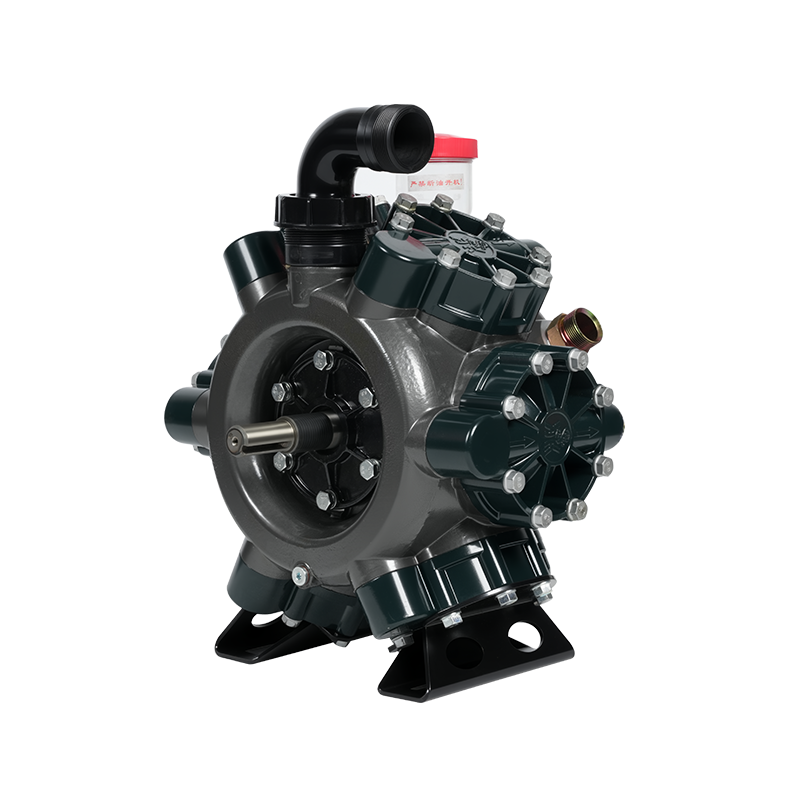
This is where modern pump design becomes important. Developed with reference to advanced international technology, today's pumps focus on stable discharge pressure, high flow rate, and corrosion resistance. These characteristics help reduce operational interruptions and improve consistency during spraying tasks.
Key Pain Points in Daily Use
Pressure Fluctuation During Operation
One common issue in spraying work is pressure instability. When pressure fluctuates, spray patterns become uneven, which can affect crop coverage. A well-designed Agricultural Sprayer Pump addresses this by maintaining stable output pressure, even during extended use.
Compatibility with Power Equipment
In many agricultural environments, equipment flexibility matters. Users may need to connect pumps to electric motors, diesel engines, or tractors, depending on available resources. A pump that cannot adapt to multiple power sources limits its usability.
Maintenance and Downtime
Frequent maintenance can interrupt workflow. Complex internal structures or poor material selection may corrosion or clogging, especially when handling chemical solutions. Pumps designed with a compact and rational structure simplify maintenance and reduce downtime.
Design Features That Matter in Practice
High Operating Pressure and Flow Rate
Higher pressure allows liquid to reach longer distances or higher crops, while a sufficient flow rate supports wider coverage in less time. These two factors together improve spraying efficiency across different terrains.
Corrosion Resistance for Chemical Use
Agricultural chemicals can be aggressive. A durable Agricultural Sprayer Pump uses materials that resist corrosion, helping extend service life and maintain consistent performance over time.
Easy Operation and Maintenance
Field conditions are rarely ideal. Equipment must be simple to operate and maintain. A pump with straightforward assembly and accessible components allows operators to perform routine checks without difficulty.
Application Scenarios Across Different Environments
Field Crops and Orchards
The Agricultural Sprayer Pump is widely used in paddy fields, dry farmland, and orchards. It supports pest control, herbicide application, and fertilizer spraying, adapting to different crop types and layouts.
Forestry and Urban Green Spaces
In forestry and urban landscaping, spraying tasks often involve larger areas or uneven terrain. Stable pressure and flexible configuration help maintain consistent coverage in these environments.
Mountainous and Hilly Areas
In regions with complex terrain, equipment must handle elevation differences. This type of pump can also assist with small-scale irrigation, water diversion, and pipeline spraying, offering practical support beyond standard spraying tasks.
Extended Industrial and Environmental Use
Beyond agriculture, the Agricultural Sprayer Pump also finds applications in industrial and environmental scenarios. It can be used for vehicle cleaning, disinfection processes, chemical infusion, and environmental treatment tasks.
This versatility reduces the need for multiple types of equipment, especially in operations where both agricultural and industrial functions overlap.
An Agricultural Sprayer Pump Factory typically develops products that support various configurations, allowing integration with multiple types of machinery. This flexibility is useful for adapting to different operational setups without requiring major modifications.
 Previous