

 EN
EN  English
 中文简体
中文简体 русский
Pumps are used across many industries to move liquids from one place to another. They may appear similar from the outside, but their operating methods can be quite different. The type of pump selected can influence how a fluid moves through a production process, how equipment is arranged, and how maintenance is handled.
An Airless Diaphragm Pump stands apart because it uses a flexible diaphragm to move fluid without relying on compressed air as the driving source. This gives it a different place within the wider pump market.
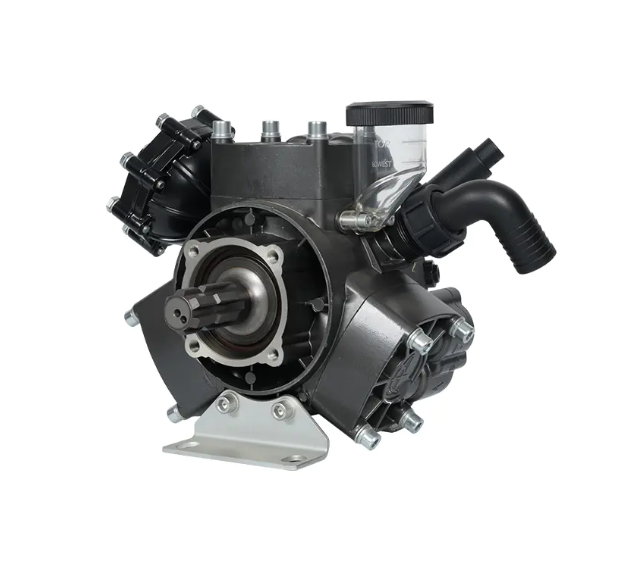
The difference is not simply about the name of the pump. It is related to how the fluid is handled, how the pump interacts with the surrounding system, and what types of applications may suit its design.
Manufacturers are paying attention to these differences as fluid handling becomes more closely connected with production planning. A pump may need to work with different liquids, fit into a compact process, or operate as part of a larger automated system.
Understanding what makes a Diaphragm Pump different can therefore help businesses think about pump selection from a practical perspective.
How Does an Airless Diaphragm Pump Move Fluid?
The main difference begins with the way the pump creates movement.
It uses a flexible diaphragm that moves back and forth. This movement changes the space inside the pump and allows liquid to enter and leave through the appropriate flow paths.
The diaphragm separates the fluid from the mechanism that creates movement.
This arrangement can be useful when the liquid needs to remain within a controlled section of the pump.
The pump does not depend on compressed air to move the diaphragm. Instead, its driving mechanism creates the movement required for fluid transfer.
That gives it a different operating concept from an air-operated diaphragm pump.
The basic process can be viewed in a simple way:
| Pump Stage | What Happens |
|---|---|
| Fluid Entry | Liquid enters the pump chamber |
| Diaphragm Movement | The diaphragm changes the chamber space |
| Fluid Movement | Pressure changes encourage the liquid to move |
| Fluid Exit | Liquid leaves through the outlet path |
| Cycle Repetition | The movement continues as part of the pumping process |
The design is relatively straightforward to understand.
What makes it interesting is how this movement can be adapted to different fluid handling needs.
Why Is the Diaphragm Important?
The diaphragm is one of the defining parts of this type of pump.
It acts as a flexible barrier between the fluid and the driving mechanism. This separation can help keep the liquid within the intended flow area.
That matters when manufacturers are dealing with fluids that need careful handling.
The diaphragm also provides the movement required for pumping. As it moves, the internal chamber changes. This creates the conditions needed for the fluid to enter and leave.
The role of the diaphragm makes material selection important.
Different applications may involve different types of liquids. Some may require greater resistance to certain substances. Others may place more emphasis on flexibility or long-term use.
This means the diaphragm should be considered as part of the complete pump design.
It is not simply a replaceable internal piece.
For pump manufacturers, diaphragm design can influence how a pump fits different applications. For users, understanding this relationship can make product selection more practical.
How Is an Airless Diaphragm Pump Different From an Air-Operated Diaphragm Pump?
The word "diaphragm" can sometimes cause confusion because several pump types use diaphragms.
The major difference is the source of movement.
An air-operated diaphragm pump uses compressed air to move the diaphragm. A Diaphragm Pump uses another driving method and does not require compressed air as its primary operating source.
This difference can influence how the pump fits into a production system.
An air-operated pump may be useful in environments where compressed air is already available and where its operating characteristics suit the process.
An airless design may be more suitable when a plant wants to avoid dependence on compressed air for fluid movement.
The distinction can be viewed like this:
| Pump Type | Diaphragm Movement | Main System Consideration |
|---|---|---|
| Airless Diaphragm Pump | Driven by a mechanical or other non-air source | Does not require compressed air for pumping |
| Air-Operated Diaphragm Pump | Driven by compressed air | Requires an air supply system |
| Other Pump Designs | Use different movement methods | Selection depends on fluid and application |
This does not mean one pump type is suitable for every situation.
The right choice depends on the application.
The key point is that a Pump offers a different way of integrating diaphragm pumping into a fluid handling system.
Can an Airless Diaphragm Pump Handle Different Types of Fluids?
Fluid compatibility is an important part of pump selection.
A pump may be used with water-based liquids, chemical solutions, coatings, oils, or other industrial fluids. These liquids can have very different characteristics.
The pump needs to match the fluid.
The diaphragm material is one consideration. Other internal parts that come into contact with the liquid also matter.
Manufacturers therefore need to look at the complete fluid path rather than focusing only on the pump body.
A suitable pump should be selected according to the characteristics of the intended liquid and the conditions of the application.
The design of a Diaphragm Pump can provide useful flexibility, but flexibility should not be confused with universal compatibility.
This distinction is important for responsible product communication.
A supplier should explain the intended application clearly. Buyers should provide information about the fluid they plan to handle.
This creates a better basis for selection.
It can also reduce the risk of choosing a pump simply because its general description sounds suitable.
What Makes the Pump Different From Conventional Mechanical Pumps?
Traditional mechanical pumps use moving components to create fluid movement. Different designs use different methods, such as rotating or reciprocating parts.
It also uses mechanical movement, but the diaphragm plays a central role in transferring that movement to the fluid.
The liquid is moved through changes in the pump chamber rather than being directly pushed by a rotating element inside the fluid path.
This distinction can affect the way the pump is designed.
The separation created by the diaphragm can be useful for certain applications. It can also influence maintenance considerations because the diaphragm is a key working component.
The comparison becomes clearer when looking at the basic operating concepts:
| Pump Approach | Basic Movement Concept | Typical Design Focus |
|---|---|---|
| Airless Diaphragm Pump | Diaphragm movement | Fluid separation and controlled movement |
| Air-Operated Diaphragm Pump | Air-driven diaphragm movement | Compressed-air operation |
| Rotary Pump | Rotating components | Continuous fluid movement |
| Piston Pump | Piston movement | Repeated chamber movement |
| Centrifugal Pump | Rotating impeller | Fluid movement through rotational action |
Each design has its own place.
The important question is not which type is universally superior.
The better question is which operating concept matches the application.
Why Does Pump Design Matter in Industrial Applications?
A pump does not operate in isolation.
It forms part of a wider system that may include tanks, pipes, valves, filters, control equipment, and other components.
This means pump selection can influence the layout of the entire process.
It may be attractive when a manufacturer wants diaphragm-based fluid handling without building a compressed-air supply around the pumping process.
This can change how the equipment is arranged.
The pump may also be considered for processes where controlled fluid movement matters.
Manufacturers should look at the full application rather than selecting a pump based only on its general category.
Questions can include:
- What type of fluid will be handled?
- How will the pump be integrated into the existing process?
- What type of driving source is available?
- How often will the pump operate?
- What type of maintenance access is required?
- Will the pump need to support changing production needs?
These questions can help connect pump selection with actual production requirements.
How Does Maintenance Influence the Choice?
Maintenance is another area where pump designs can differ.
The diaphragm is a working part. Over time, normal use can lead to wear. The surrounding components also need appropriate inspection and care.
The maintenance approach depends on the pump design and application.
A well-planned maintenance process can help manufacturers identify problems before they affect the wider system.
Access is important as well.
If a pump is difficult to inspect or service, routine maintenance may become more complicated. Manufacturers should therefore consider how the pump will be installed and how operators will reach the relevant components.
This is an area where product design and factory planning meet.
A pump that fits well into a system should not only perform its intended fluid handling role. It should also be practical for the people responsible for operating and maintaining it.
For this reason, maintenance requirements should be discussed before purchasing rather than after installation.
Could Airless Diaphragm Pumps Fit Into More Automated Systems?
Automation is changing the way manufacturers think about fluid handling.
Modern production systems increasingly connect pumps with controls, sensors, and other equipment. The goal is to create a more coordinated process rather than operate each component independently.
It can be incorporated into such systems when its operating method fits the overall process.
This creates opportunities for more coordinated fluid movement.
The pump can become part of a larger sequence where liquid transfer is linked with other production activities.
However, automation does not automatically make a pump suitable.
The complete system still needs to be considered.
The pump, control method, fluid characteristics, and surrounding equipment should work together.
This is why pump manufacturers are paying more attention to adaptability.
A pump designed for a narrow application may be appropriate for a dedicated process. Another design may be developed with greater flexibility for manufacturers that handle different products.
The growing connection between pumps and automated equipment is therefore creating new questions around pump design.
Can the pump adapt to different production conditions?
Can operators monitor its operation easily?
Can the pump fit into an existing control structure?
These questions are becoming part of the broader discussion around industrial fluid handling.
Which Applications May Benefit From an Airless Diaphragm Pump?
The applications for diaphragm-based pumps can vary widely.
They may be considered in areas such as chemical handling, coatings, industrial processing, water-related operations, equipment manufacturing, and other fluid transfer tasks.
The suitability depends on the specific application.
A pump used in a chemical process may have different material requirements from one used with a general industrial liquid.
A production system that handles several fluids may also have different priorities from a dedicated transfer process.
This makes application analysis important.
The Airless Diaphragm Pump is not simply another version of a conventional pump. Its value comes from the way its diaphragm-based design interacts with the fluid and the wider equipment system.
As manufacturers look for more adaptable ways to manage liquids, the distinction between different pump designs becomes increasingly relevant.
The discussion is moving beyond the basic question of whether a pump can move a liquid. Buyers are also considering how the pump fits the process, how it handles the intended fluid, how it can be maintained, and how it may connect with changing production systems.
 Previous