

 EN
EN  English
 中文简体
中文简体 русский
Spraying operations in agriculture and plant protection demand stable pressure, consistent flow, and resistance to chemical corrosion. In paddy fields, orchards, forests, and urban landscaping projects, uneven terrain and long operation hours place continuous stress on spraying systems. Operators often struggle with pressure fluctuation, leakage, diaphragm wear, and difficulty in maintenance.
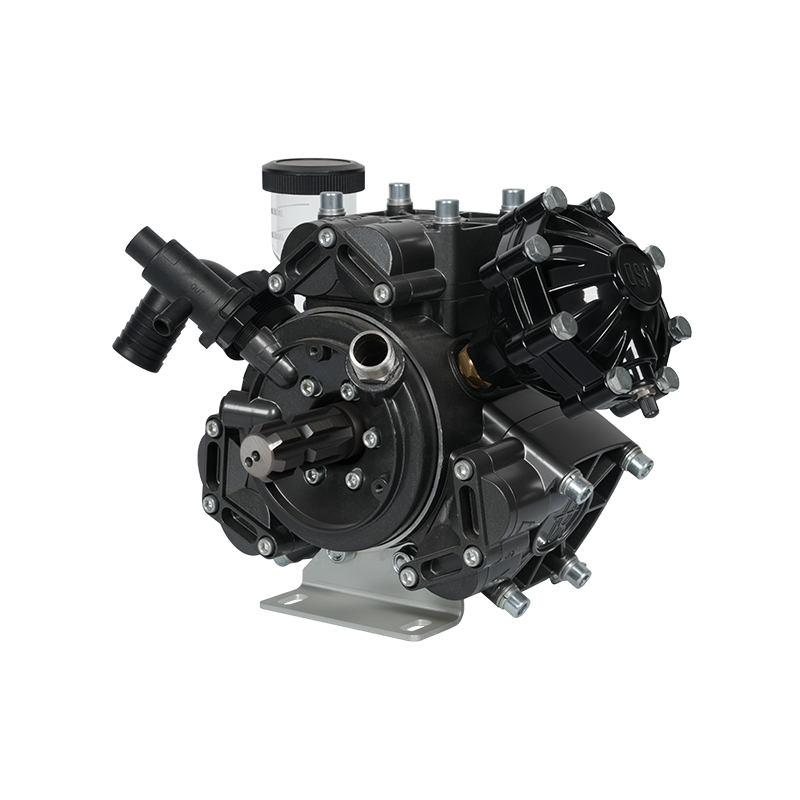
A well-designed Crop Spraying Diaphragm Pump addresses these concerns by maintaining steady discharge pressure while handling a wide range of liquid formulations such as pesticides, herbicides, and liquid fertilizers. Stable atomization directly affects droplet distribution and coverage, which in turn influences treatment effectiveness.
Why Pressure Stability Matters in Spraying Applications
Pressure inconsistency can disrupt spray patterns, causing uneven coverage across crops. Low pressure reduces atomization quality, while unstable pressure may overload pipelines and spray nozzles. A Crop Spraying Diaphragm Pump developed with advanced structural design maintains balanced discharge even during long working cycles.
High operating pressure combined with stable output allows the pump to adapt to extended hose lengths and multi-nozzle systems. This is particularly valuable in orchards and forest areas where spray height and distance require additional hydraulic support. Stable pressure also supports uniform mixing and delivery of agrochemicals without sudden surges.
Structural Design and Corrosion Resistance
Agricultural spraying frequently involves corrosive chemical solutions. Pump components exposed to these liquids must resist chemical reaction and material degradation. Modern diaphragm pump systems are engineered with corrosion-resistant materials that maintain mechanical integrity over time.
The compact and rational internal structure of a Crop Spraying Diaphragm Pump reduces internal friction and mechanical stress. Diaphragm separation between the liquid chamber and mechanical drive components prevents contamination of moving parts. This structural feature contributes to smoother operation and simplified servicing.
In disinfection and environmental applications, where chemical formulations vary widely, corrosion resistance extends the pump's usability beyond agriculture into industrial spraying scenarios.
Flexible Power Matching for Diverse Equipment
Operational flexibility is often overlooked when selecting spraying systems. Field conditions vary significantly between flat farmland and mountainous regions. A pump that can integrate with different power sources expands operational range.
A Crop Spraying Diaphragm Pump can be paired with electric motors, diesel engines, gasoline engines, tractors, and even vehicle-mounted systems. This compatibility supports multiple sprayer configurations, including trailer-mounted sprayers and misting units.
In hilly and mountainous regions, where access to grid electricity may be limited, diesel or gasoline-driven configurations provide mobility. For greenhouse or urban garden applications, electric motor coupling offers quieter operation and easier control.
Multi-Scenario Applications Beyond Crop Protection
Although widely used in pest control across paddy and dry fields, the application scope extends further. In orchards and forests, high-flow capacity supports vertical spraying and canopy penetration. Urban landscaping departments use similar systems for garden pest management and sanitation.
Certain geographical areas require small-scale irrigation and drainage support. The dehydration capability of the pump allows temporary water diversion and pipeline flushing. In underground pipeline spraying, steady flow performance supports uniform chemical infusion.
Industrial sectors also utilize diaphragm pump systems for vehicle cleaning, disinfection, and environmental treatment projects. These cross-sector applications increase operational value without requiring complex structural modifications.
 Previous