

 EN
EN  English
 中文简体
中文简体 русский
Modern agricultural spraying relies on stable pressure, predictable flow, and reliable chemical handling. A Diaphragm Pump For Pesticides fits these needs because its working principle separates the chemical liquid from the mechanical drive. This structure helps the pump cope with aggressive formulations commonly used in crop protection.
From a factory perspective, this pump type is widely applied in boom sprayers, orchard sprayers, and trailer-mounted units. Its ability to self-prime and maintain pressure across multiple nozzles allows operators to focus on application accuracy rather than constant adjustments.
Why Chemical Compatibility Matters in Daily Use
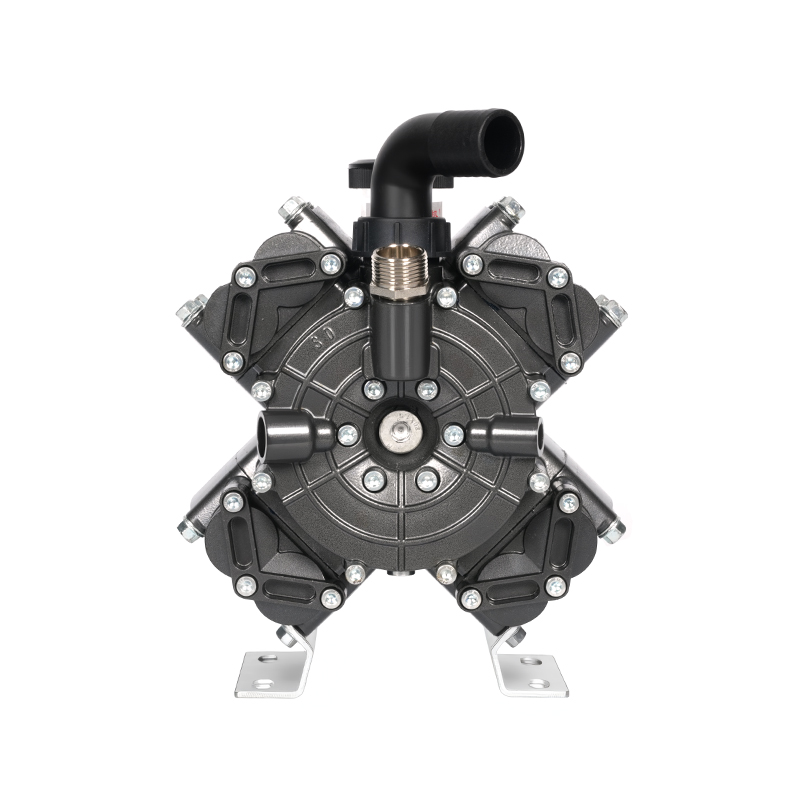
Pesticides are not uniform liquids. Some are acidic, some alkaline, and others contain additives that attack seals over time. A Diaphragm Pump For Pesticides is typically built with polypropylene housings and elastomers like EPDM or PTFE. These materials slow down chemical attack and reduce unexpected downtime.
A Diaphragm Pump For Pesticides Manufacturer usually provides compatibility references for diaphragm and valve materials. Checking these details before selecting a pump helps avoid early wear and unstable output during spraying tasks.
Flow Rate and Pressure: Matching the Real Application
Flow rate is not just a pump specification; it directly connects to boom width, travel speed, and nozzle selection. When the pump cannot maintain enough flow at working pressure, spray patterns become uneven.
Most agricultural systems operate within a moderate pressure range that supports nozzle performance without stressing hoses and fittings. A pump selected with some margin above the calculated demand will perform more steadily as parts age. This is why many engineers recommend reviewing nozzle charts together with pump curves instead of relying on nominal values alone.
Self-Priming and Dry Running in Field Conditions
Field work is rarely ideal. Tanks run low, suction lines draw air, and refilling may interrupt operation. A diaphragm pump can tolerate short dry-running periods, which reduces the risk of immediate damage during these moments.
Self-priming also simplifies installation. The pump can pull liquid from a tank positioned below the inlet, making it easier to integrate into compact sprayer frames without complex piping.
Diaphragm Materials and Their Practical Differences
The diaphragm itself is a wear component. EPDM diaphragms are commonly used because they handle many fertilizers and pesticides at a reasonable cost. For chemicals with stronger solvent properties, PTFE diaphragms offer broader resistance.

Choosing between these options is a balance between expected chemical exposure and replacement intervals. A Diaphragm Pump For Pesticides Manufacturer often designs pumps so that diaphragm replacement can be done without special tools, which supports routine service in agricultural environments.
Durability Through Internal Isolation Design
One reason piston-diaphragm pumps are popular is the separation between hydraulic oil and the sprayed liquid. This isolation protects internal metal components from corrosion and abrasive particles.
Over time, valves and diaphragms will still wear, but the maintenance process is usually predictable. This design approach helps control operating costs across multiple spraying seasons rather than causing sudden system failure.
When a diaphragm pump runs hot, it signals a system issue rather than a single faulty part. Low hydraulic oil levels reduce cooling and lubrication. Contaminated oil also increases internal friction.
Blocked filters or undersized hoses create resistance that forces the pump to work harder. In some cases, worn diaphragms or piston seals reduce efficiency, pushing the pump to cycle more frequently. Regular inspection of oil condition, valves, and plumbing layout helps prevent these situations.
 Previous