

 EN
EN  English
 中文简体
中文简体 русский
Walk through a working field during spraying hours and one thing becomes clear. The outcome is not only shaped by what is applied, but by how it is delivered. The motion of liquid, the steadiness of pressure, and the rhythm of operation all come together in ways that are easy to overlook. Behind that process sits the sprayer pump, doing quiet but continuous work.
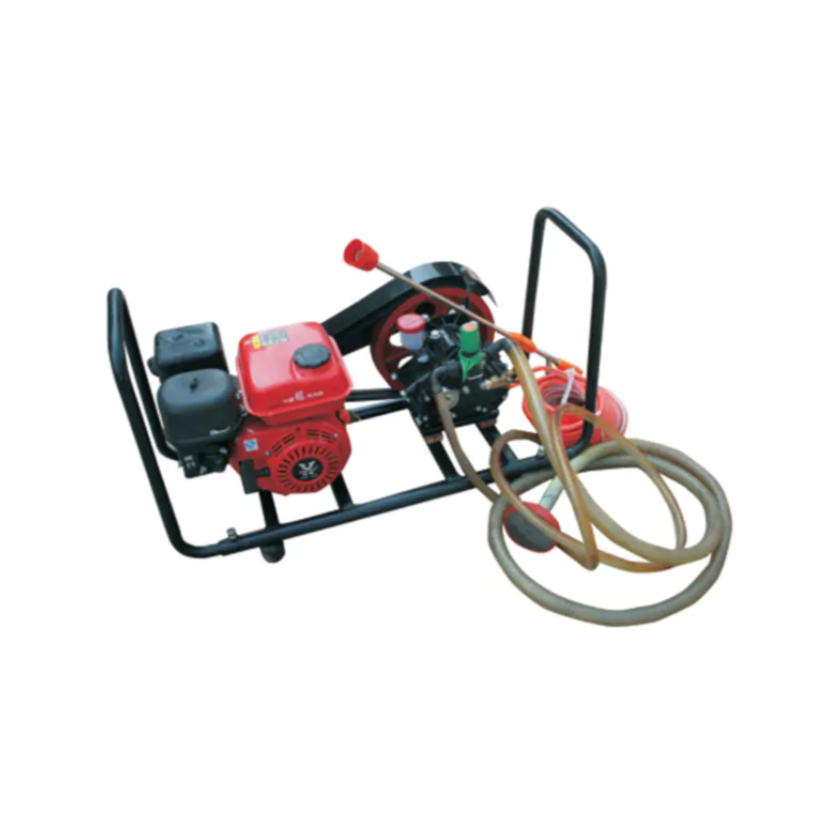
Agricultural Sprayer Pump Manufacturer in this space are no longer focused on simple output. Attention has shifted toward how spraying feels during use and how consistently it performs across changing ground conditions. Spray efficiency, in practice, is less about speed and more about control that holds steady from one pass to the next.
What makes spray efficiency noticeable in real field conditions?
In everyday work, efficiency shows up in subtle ways. A stable spray pattern reduces the need to go back over the same area. It also removes the uncertainty that often comes with uneven coverage.
Operators tend to notice this through workflow rather than measurement. When spraying moves forward without interruption, the process feels smoother. There is less second-guessing. The equipment begins to feel predictable, which is often more valuable than raw output.
This predictability also affects planning. When performance stays consistent, decisions in the field become simpler. Time is spent on movement and positioning rather than constant adjustment.
How does internal pump design shape spray consistency?
Inside the pump, liquid does not simply pass through. It moves, changes direction, and responds to the structure around it. Small irregularities in that path can create variations that carry all the way to the spray pattern.
Manufacturers have been refining these internal paths with a focus on continuity. Gradual transitions tend to support smoother movement. When the flow remains steady, the spray leaving the system reflects that stability.
There is also the matter of repetition. Pumps are expected to maintain the same behavior over extended use. A design that holds its form under continuous operation helps avoid shifts in output that can disrupt the spraying process.
Why do material choices still matter in modern pump design?
Materials are often discussed in terms of strength, yet their role is broader than that. In field use, a pump is exposed to moisture, residue, and ongoing movement. The way materials respond to these conditions influences how the system feels over time.
Weight plays a part as well. Equipment that feels too heavy can slow down handling, while overly light structures may lack a sense of stability. The balance between these two affects how confidently the pump can be used during long sessions.
Internal surface quality is another detail that quietly shapes performance. A smoother passage allows liquid to move with fewer interruptions. This contributes to a more even output without requiring additional adjustment from the user.
How are manufacturers responding to uneven and changing terrain?
Very few fields offer uniform conditions from edge to edge. Slight slopes, softer ground, and varying crop density all influence how spraying unfolds. A rigid system struggles in this kind of environment.
Manufacturers are leaning toward designs that adjust without drawing attention to the adjustment itself. Instead of fixed behavior, the pump responds to movement in a more fluid way. When the operator shifts direction or pace, the system follows without sharp changes.
This kind of response reduces the need for constant correction. The pump becomes less of a tool that requires management and more of a support that adapts quietly in the background.
What design details help maintain steady control during operation?
Control is often misunderstood as something that requires complexity. In practice, the opposite is usually true. Clear, direct response makes control easier to maintain.
Several elements contribute to this:
Gradual response to input
Sudden changes can disrupt rhythm. A smoother reaction helps maintain balance.
Even distribution within the system
When pressure remains stable, the spray pattern follows suit.
Simple interaction points
Clear handling areas reduce distraction and allow focus to stay on the field.
Consistent behavior over time
Predictability builds trust in the equipment during extended use.
These features are not about adding layers. They are about refining how the system reacts in everyday situations.
How is long-term usability influencing manufacturing decisions?
Sprayer pumps are not used occasionally. They operate repeatedly under similar conditions, which places steady demand on their structure. Over time, even small weaknesses can become noticeable.
Manufacturers are paying closer attention to areas that experience frequent motion. By reinforcing these sections, they aim to maintain stable performance without visible decline.
Ease of maintenance has also become part of the conversation. When components are easier to access, routine care is more likely to happen. This keeps the system running in a consistent manner without adding extra burden to the user.
| Design Consideration | Effect in Daily Use |
|---|---|
| Smooth internal flow | Reduces variation in spray pattern |
| Balanced construction | Supports steady handling |
| Accessible layout | Simplifies routine maintenance |
| Stable sealing points | Helps maintain consistent operation |
What ongoing challenges continue to shape spray efficiency?
Not every factor can be controlled by the pump itself. External conditions, such as air movement or ground variation, continue to influence how spray behaves after it leaves the system.
User habits also introduce variation. Different handling styles can affect consistency, even when the equipment performs as expected. Because of this, manufacturers often design systems that tolerate small differences in use.
There is also a balance to consider between flexibility and simplicity. More adaptable systems can respond to a wider range of conditions, but they may also require more awareness during operation. Finding a middle ground remains an active area of development.
How are small refinements changing real-world performance?
Progress in this field rarely comes from large shifts. More often, it is the result of small adjustments made over time. A smoother internal curve, a slightly improved connection, or a more balanced structure can all influence how the pump behaves during use.
These changes may not stand out visually. Their effect becomes clear through repetition. The system feels steadier. The spray pattern remains consistent across longer periods.
Manufacturers often rely on observation from actual field use. Feedback shapes the next adjustment, and that adjustment leads to another. Over time, this process builds a system that aligns more closely with how work is really carried out.
 Previous