

 EN
EN  English
 中文简体
中文简体 русский
Walk through any working farm during spraying season and you will notice something quickly. The focus is rarely on the pump itself. Attention stays on coverage, timing, and weather. Still, the pump quietly determines how smoothly everything runs.
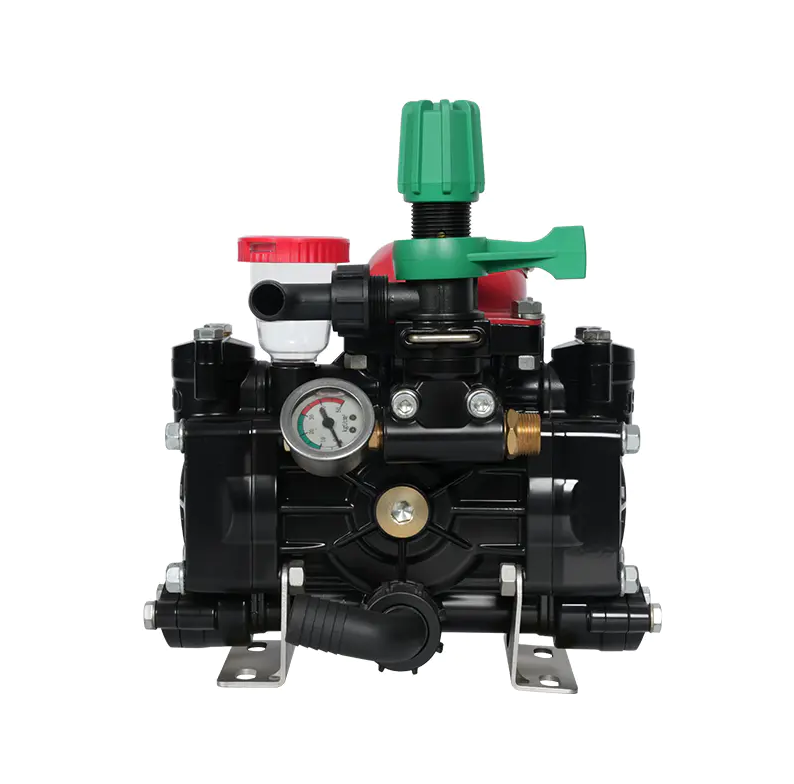
Among the different options available, Crop Spraying Diaphragm Pump keep appearing in real-world setups. Not because of hype or novelty, but because they tend to fit the kind of work farmers actually do. Conditions shift. Liquids vary. Time is limited. Equipment that can deal with all three tends to stay in use.
What Makes The Internal Design So Practical?
The working principle is not difficult to follow. A flexible diaphragm moves back and forth, creating a cycle that draws liquid in and pushes it out. That motion is controlled, almost rhythmic.
What stands out is the separation inside the pump. The liquid does not move through a space crowded with exposed mechanical parts. Instead, it stays within a defined chamber. This reduces direct contact where wear would normally build up.
In everyday use, that detail changes how the pump ages. Instead of performance dropping quickly after exposure to mixed or reactive liquids, the system keeps a more stable behavior over time. It is not immune to wear, but the process feels slower and more predictable.
Does It Cope Well With Changing Liquid Conditions?
Spraying work is rarely uniform. One task may involve a thin mixture, while another includes suspended material. Even small differences can affect how a pump responds.
Diaphragm pumps tend to absorb these variations rather than react sharply to them. The flexible membrane adjusts to the liquid's movement instead of forcing it through a rigid path. Because of this, small inconsistencies do not immediately to disruption.
Operators often notice this during longer sessions. There is less need to stop and check for uneven flow. The system keeps moving, even when the liquid is not perfectly consistent.
| Field Condition | Observed Pump Behavior |
|---|---|
| Light, fluid mixtures | Smooth and continuous flow |
| Slightly dense solutions | Stable movement without strain |
| Minor impurities present | Continued operation with minimal blockage |
| Changing spray demands | Gradual adjustment, not sudden shifts |
How Important Is Durability In Real Use?
Out in the field, durability is not an abstract idea. Equipment is exposed to dust, vibration, and long hours. Breakdowns rarely happen at convenient times.
Diaphragm pumps tend to handle these conditions with fewer surprises. Since the internal components are less exposed to the sprayed liquid, there is less immediate damage from chemical contact. Wear still happens, but it usually shows up gradually.
This has a direct effect on workflow. Instead of sudden failures, operators deal with slow, noticeable changes. That gives them time to respond before the issue becomes serious.
It also reduces the mental load. When equipment behaves in a predictable way, planning becomes easier. There is less guesswork involved in daily operations.
Can It Help Maintain Even Spraying Across The Field?
Even coverage is harder to achieve than it looks. A small fluctuation in pressure can change how droplets form and spread. Over time, those small differences add up.
A diaphragm pump produces a flow that feels steady rather than abrupt. The motion inside the pump does not create sharp bursts. Instead, it supports a more balanced output.
In practice, this means fewer corrections during use. Once the system is adjusted, it tends to stay within a consistent range. Operators are not constantly adjusting settings to keep things even.
That consistency also reduces waste. When distribution is more uniform, there is less chance of applying too much in one area and too little in another.
What Is It Like To Maintain One In Daily Work?
Maintenance often comes down to access. If parts are difficult to reach, even simple checks can turn into time-consuming tasks.
With diaphragm pumps, the structure is relatively open. Key components can be inspected without complex steps. Routine checks do not require advanced tools or extended downtime.
The diaphragm itself is a part that will eventually wear out. That is expected. What matters is that it can be replaced without rebuilding the entire system. The process is direct and manageable.
For many users, this makes a difference. Maintenance becomes something that fits into the workday, rather than interrupting it.
Does It Fit Different Types Of Spraying Equipment?
Not all spraying systems are built the same. Some are compact and used for smaller areas. Others are part of larger machines that cover wide sections of land.
A diaphragm pump does not demand a single type of setup. It works across different configurations with minimal adjustment. This flexibility allows it to move between applications without requiring a complete system change.
It also responds well to different control styles. Whether adjustments are made manually or through automated systems, the pump maintains a stable response.
This adaptability reduces the need to keep multiple pump types on hand. One design can serve several roles.
Why Does Chemical Compatibility Matter Over Time?
Spraying liquids are not always neutral. Some can affect materials after repeated exposure. Over time, this can Find to internal damage or reduced performance.
The diaphragm pump limits this risk by keeping the liquid within a contained path. Sensitive components are not directly exposed. This separation slows down the impact of chemical interaction.
Material selection inside the pump also supports this. Components are chosen to handle a range of liquids without rapid deterioration.
For operators, this reduces uncertainty. The same pump can be used across different tasks without constant concern about long-term effects.
How Does It Influence Day-To-Day Efficiency?
Efficiency in agriculture means more than just going faster. It's about having equipment you can rely on, that's easy to work with, and that keeps performing steadily hour after hour.
A diaphragm pump supports this in real, practical ways:
- It minimizes downtime because it requires less maintenance and fewer repairs during the season.
- It keeps a steady, consistent flow even through long spraying sessions.
- It handles different types of liquids without needing constant adjustments or changes.
- It installs easily into various sprayer setups with very little modification.
All of this creates a smoother workday. Operators spend far less time fixing problems and more time actually covering the fields.
On top of that, consistent performance reduces product waste. Better accuracy means lower costs and more responsible chemical application overall.
What Keeps It Relevant In Changing Farming Practices?
Agricultural methods continue to evolve. Equipment is expected to adapt, not resist change. Systems that can handle different conditions without major redesign tend to stay in use.
Diaphragm pumps fit into this pattern. They do not depend on a narrow set of conditions. Their design allows them to function across a range of applications.
As spraying practices shift, the pump does not become obsolete. It adjusts. That ability to remain useful, even as surrounding systems change, is part of why it continues to appear in modern setups.
 Previous