

 EN
EN  English
 中文简体
中文简体 русский
In many industrial conversations, the term "airless diaphragm pump" appears more often than before. It shows up in discussions about fluid transfer, coating systems, and production workflows where stable delivery matters. The name itself sounds technical, yet the idea behind it is not difficult to follow. At its core, it is a device designed to move liquids using a flexible diaphragm rather than relying on rotating parts or external air drive systems.
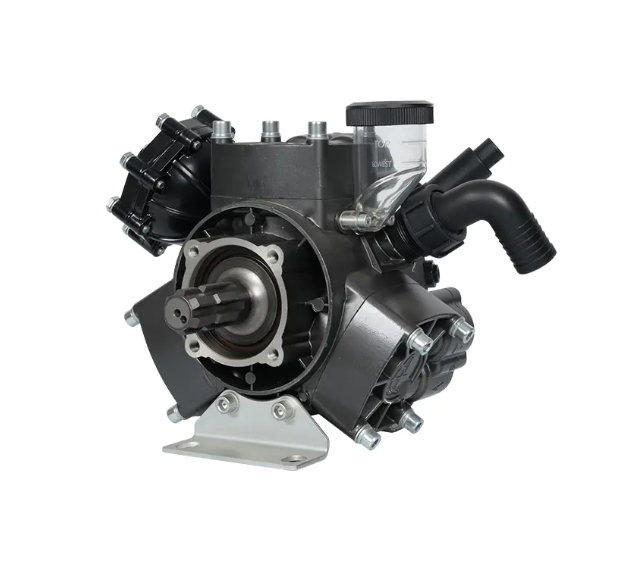
In recent industry observations, there has been a shift toward simpler and more adaptable pumping solutions. This shift is not about chasing complexity. It is about finding equipment that can operate in changing conditions without constant adjustment. The diaphragm pump fits into this context. It offers a different way to move fluids, especially in situations where consistency and control are expected over long periods of use.
What Defines An Airless Diaphragm Pump?
Diaphragm pumps rely on a flexible membrane component known as a diaphragm. This part moves back and forth within the pump's inner chamber, constantly switching the internal pressure between low and high states. This cyclic pressure shift sucks fluid into the chamber and discharges it outward steadily.
It is labeled "airless" because the device does not need external compressed air to operate. The diaphragm is driven entirely by built-in mechanical structures. This core design difference makes its working performance and operating style totally different from traditional air-driven diaphragm pumps.
This pump adopts a positive displacement structure without any rotating parts. It transports fluid by adjusting the internal chamber volume, rather than pushing liquid through high-speed spinning movement. This generates stable, smooth fluid flow with almost no turbulence.
The overall structure is compact and lightweight, with very few moving components. Such a simple build makes daily operation straightforward and greatly lowers routine maintenance difficulty.
How Does The Internal Movement Create Flow?
This pump operates with a continuous back-and-forth motion. When the diaphragm moves to one side, a vacuum forms inside the chamber and draws fluid in through the inlet. As it swings back, the chamber space narrows and pushes the fluid out of the outlet.
The cycle runs constantly. Every stroke delivers a fixed volume of fluid, so the overall flow stays even and reliable.
Fitted internal check components control flow direction. They let fluid move ahead and block reverse flow entirely. These parts function purely from pressure changes, with no additional control systems required.
There are no rotating shafts inside the pump, so you won't need to adjust component alignment or run the unit at high speed. It relies on volume displacement to transfer fluid, which works perfectly for tasks that need soft, careful fluid handling.
Why Is This Design Not Dependent On External Air Supply?
Most regular diaphragm pumps use compressed air to drive the diaphragm. Though reliable, they need regular maintenance for air pipelines, and staff have to keep an eye on air pressure all the time.
The airless model comes with an integrated drive system, so it requires no external air supply. Installation is far simpler, with no need to run extra air lines or adjust pressure settings.
It can keep running smoothly in places where compressed air is unreliable or not available at all, with no downtime related to air system issues.
As a self-contained unit, it fits into all kinds of production lines and offers greater flexibility for daily operations.
How Does It Handle Different Types Of Fluids?
This pump is widely used across many industries, as it can handle all sorts of liquids, from thin, free-flowing fluids to thick, viscous materials.
It moves fluid by changing the chamber volume instead of spinning parts at high speed. This design copes well with fluids that are hard to pump with conventional equipment.
In addition, moving mechanical parts make very little contact with the fluid. This greatly reduces shear force and prevents the liquid's original properties from being altered.
It is well suited for applications where fluid composition must stay unchanged. Even if the liquid's characteristics shift during operation, the pump can still run reliably.
What Role Does Structure Play In Daily Operation?
Crop Spraying Diaphragm Pump feature a simple internal build. While the design is uncomplicated, every part is engineered with clear, dedicated functions and precise workmanship.
The diaphragm sits at the heart of the pump. It divides the unit into a drive section and a fluid section, stopping the pumped liquid from coming into contact with internal mechanical parts.
Inlet and outlet channels are laid out to guide fluid in a fixed direction. This layout cuts down flow resistance and keeps the delivery fully under control.
Unlike other pumps, this design uses almost no high-speed moving parts, so its wear characteristics are quite different. Maintenance work mainly focuses on flexible parts and seals, rather than rotating components.
The pump's overall structure also affects daily inspection and routine upkeep, and it shapes how operators run the equipment day to day.
How Does It Compare With Other Pumping Methods?
In industrial discussions, comparisons often arise. Diaphragm pumps are sometimes placed alongside centrifugal pumps or air-driven diaphragm systems.
Each type has its own characteristics. Centrifugal pumps rely on rotational energy. They are often associated with continuous flow at steady conditions. Air-driven diaphragm pumps depend on compressed air systems.
The airless diaphragm pump sits between these approaches. It offers controlled displacement without external air reliance. It does not aim to replace other types entirely. Instead, it provides an alternative where certain conditions make it suitable.
For example, in settings where air supply is limited or where fluid sensitivity is a concern, this design may be considered. In other cases, different pump types may be more appropriate.
The choice often depends on how the pump will be used rather than on a single defining feature.
What Maintenance Patterns Are Common In Practice?
For airless diaphragm pumps, daily upkeep centers on monitoring how the equipment runs. Since there are no intricate rotating parts inside, wear from spinning mechanical components is not a big issue.
The diaphragm is the core part you need to keep a close eye on. It moves back and forth nonstop while the pump is in use, and prolonged operation will eventually wear the material out from repeated movement.
Sealing surfaces also need to be checked on a regular basis. They hold steady pressure inside the pump cavity, and even a small leak here will throw off the normal flow of fluid.
These pumps rarely break down all of a sudden. Most problems develop little by little as they keep running, and performance drops slowly over time.
Maintenance workers can easily spot these gradual changes early on. This lets the team plan servicing ahead of schedule, instead of scrambling to fix unexpected breakdowns.
Unlike many other pump types, this model does not need an external air supply system. With fewer parts to examine, routine maintenance becomes far simpler overall.
How Does It Fit Into Modern Industrial Workflows?
Industrial workflows continue to evolve. There is a growing emphasis on adaptability. Equipment is expected to function across different conditions without extensive reconfiguration.
The diaphragm pump aligns with this direction. Its self-contained nature allows it to be placed in various settings with minimal adjustment.
It can operate in environments where space is limited. It can be integrated into systems where external infrastructure is not always available.
Another aspect is operational continuity. In processes where stopping production is not desirable, equipment that offers stable performance becomes valuable.
The pump's ability to maintain flow through repeated cycles supports this need. It does not rely on external fluctuations. Its behavior remains tied to its internal mechanism.
This consistency is one of the reasons it continues to be discussed in industry contexts.
What Typical Components Are Found Inside The Pump?
A simplified view of the internal structure can be presented in the following table:
| Component | Function Description | Operational Role |
|---|---|---|
| Diaphragm | Flexible membrane that moves back and forth | Creates pressure changes |
| Pump Chamber | Enclosed space for fluid movement | Holds and directs fluid |
| Inlet Path | Entry point for incoming fluid | Allows fluid to enter |
| Outlet Path | Exit point for discharged fluid | Guides fluid outward |
| Check Mechanism | Directional control element | Prevents reverse flow |
| Drive Section | Internal force generation | Controls diaphragm motion |
This table does not capture every detail. It provides a general outline that helps explain how the system operates as a whole.
How Does The Pump Respond To Changing Conditions?
In real-world use, conditions rarely remain constant. Fluid properties can shift. Operating demands may increase or decrease.
The diaphragm pump responds through its cycle-based movement. Each cycle adjusts naturally to the resistance it encounters.
If the fluid becomes thicker, the diaphragm continues its motion. The flow rate may change, but the mechanism remains stable. If resistance decreases, the flow adjusts accordingly.
This adaptability does not mean the pump is unaffected by changes. It means that the response is built into the design rather than controlled externally.
Operators often observe these changes as part of normal operation. The pump becomes part of a dynamic system rather than a fixed-output device.
Why Is It Often Associated With Controlled Flow Applications?
Controlled flow does not always mean high precision. It often refers to consistency over time. The diaphragm pump produces flow through repeated, similar cycles.
This repetition creates a rhythm. Each movement contributes to the overall output. When the rhythm remains stable, the flow appears steady.
This behavior can be useful in applications where sudden surges are not desirable. It allows processes to maintain a more predictable pattern.
The design does not eliminate variation entirely. It reduces abrupt changes that might occur with other methods.
In practice, this characteristic supports operations where balance matters more than speed.
How Do Operators Interact With This Type Of Pump?
From an operator's perspective, the interaction is often straightforward. The pump does not require complex adjustments during normal use.
Observation becomes an important part of operation. Changes in sound, movement, or output can signal shifts in condition.
Because the system is self-contained, there are fewer external variables to manage. This allows operators to focus on the pump itself rather than on supporting systems.
Training often emphasizes understanding the cycle rather than memorizing detailed procedures. Once the basic motion is understood, the behavior of the pump becomes easier to interpret.
This simplicity does not remove the need for attention. It changes the type of attention required.
What Trends Are Emerging Around Its Use?
Industry conversations suggest a growing interest in equipment that balances simplicity and adaptability. The airless diaphragm pump reflects this trend.
It is not positioned as a universal solution. It is part of a broader range of tools. Its relevance comes from how it fits into specific scenarios.
Discussions often highlight its independence from external air systems. They also note its ability to handle different fluid conditions without extensive modification.
At the same time, there is recognition that no single design meets every need. The choice of pump remains tied to application context.
As workflows continue to change, the role of such pumps may continue to evolve. Their presence in industry discussions indicates an ongoing exploration of practical solutions.
 Previous