

 EN
EN  English
 中文简体
中文简体 русский
In many farming routines, decisions rarely happen in a single moment. They take shape over time, often influenced by what worked before and what caused unnecessary trouble. A diaphragm agricultural sprayer pump tends to fall into this category. It is not always discussed at length, yet it plays a steady role in daily operations.
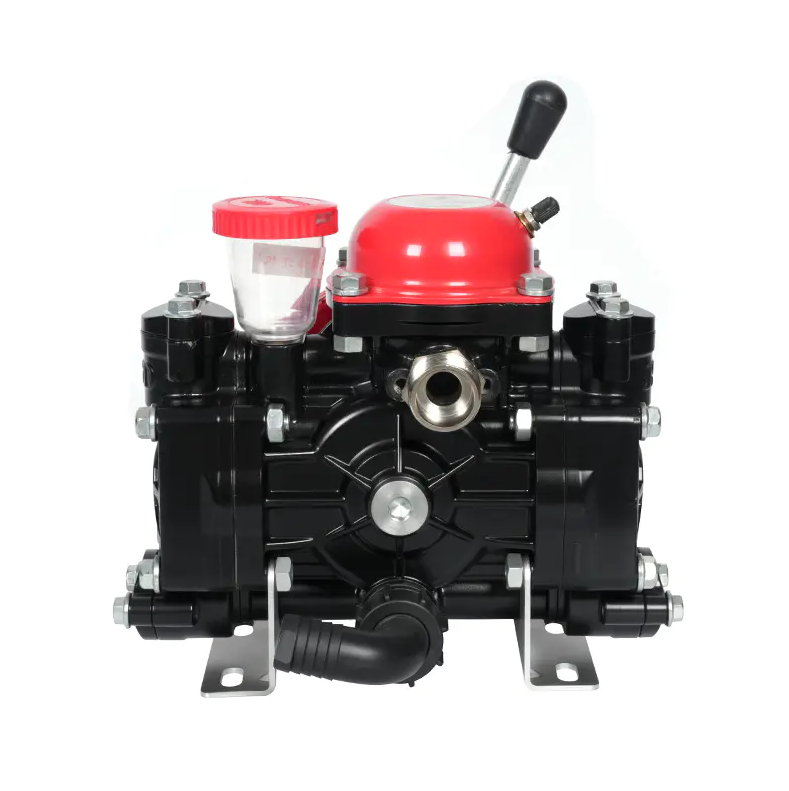
At glance, attention often goes to visible factors such as cost or output. But after a few seasons, those details fade into the background. What remains important is how the pump behaves when the work becomes repetitive, when conditions shift, and when time is limited. A tool that keeps working without drawing attention to itself becomes part of the routine.
How does the pump fit into real field conditions?
A diaphragm sprayer pump does not operate alone. It works alongside tanks, hoses, filters, and spray systems. Because of this, its value is not in standing out, but in staying consistent within a larger setup.
In broader conversations, many users refer to it as a Sprayer Diaphragm Pump , especially when discussing general applications. The terminology may vary, but the expectations remain simple. It should deliver a steady flow. It should not feel unpredictable. It should respond in a way that feels natural during operation.
Field conditions are rarely stable. Wind changes direction. Terrain shifts. Liquid mixtures vary. Under these conditions, a pump that behaves the same way each time becomes easier to trust. Over time, predictability matters more than peak performance.
Why does adjustability start to matter more over time?
At the beginning, a fixed setup may seem enough. It works for one crop, one field, one method. But farming rarely stays that simple. Different crops require different spraying patterns. Field sizes change. Liquid mixtures are not always identical.
This is where the idea behind Adjustable Sprayer Diaphragm Pump China begins to appear more often in discussions. The focus is not only on where the pump is made, but on how easily it adapts.
In practical use, adjustability shows itself in small ways:
- the ability to shift flow without interrupting work
- adapting to thicker or lighter liquid mixtures
- making quick changes when moving between fields
These are not dramatic features. They are quiet improvements that reduce friction in daily tasks. Over time, they make the difference between working around a machine and working with it.
What role does the manufacturing source really play?
Not every user thinks about production background. However, when equipment is purchased in larger quantities or used across multiple setups, the origin becomes part of the decision.
The term Sprayer Diaphragm Pump Factory often appears in sourcing conversations. It suggests more than a place of production. It reflects familiarity with the product and repetition in the manufacturing process.
This often shows in subtle ways:
- parts align without forcing them into place
- the pump runs with a stable rhythm
- different units behave in similar ways
These are not details that stand out immediately. They become noticeable after repeated use. When a pump feels consistent from one unit to another, it reduces uncertainty.
How does automation change the experience?
As equipment evolves, automation gradually enters the picture. Not every operation requires it, and not every user prefers it. Still, in certain environments, it shifts how the pump is used.
References to an Automatic Sprayer Diaphragm Pump Manufacturer often relate to systems that reduce manual steps. The intention is not to remove control, but to simplify routine actions.
In practice, this may appear as:
- smoother transitions when starting or stopping
- less need to monitor small adjustments continuously
- more stable performance during longer working hours
For some, this creates a more efficient workflow. For others, manual control still feels more reliable. The preference often depends on the scale of work and the conditions in which the pump operates.
What signs suggest a pump will work well?
Choosing a diaphragm sprayer pump rarely depends on one feature. It is usually a combination of small observations gathered during use.
Some practical signs often stand out:
- it starts without delay or hesitation
- it maintains a steady pace without fluctuation
- it does not demand constant attention
- it reacts smoothly when adjustments are made
These are not technical measurements. They are impressions formed through experience. A pump that feels stable tends to reduce interruptions, even if its specifications are not the focus.
How do daily habits influence maintenance?
Maintenance is rarely about complex procedures. In some cases, it is about simple habits repeated over time.
A diaphragm sprayer pump that is checked regularly tends to remain reliable. Small actions make a difference:
- rinsing after use to prevent residue buildup
- checking connections before starting work
- noticing changes in sound or movement
These actions do not require much time. However, they help prevent gradual wear from becoming a larger issue. When maintenance becomes part of the routine, the pump continues to behave in a predictable way.
Why does simplicity often feel more practical?
It is easy to assume that more features bring better results. In reality, complexity sometimes creates new challenges. More components mean more points that require attention.
A simpler diaphragm agricultural sprayer pump often feels easier to manage:
- fewer adjustments during operation
- clearer understanding of how it behaves
- quicker response when something changes
This does not mean advanced options are unnecessary. It suggests that balance matters. A pump should match the way it will be used, rather than offering features that remain unused.
How does experience change the way choices are made?
First-time buyers often rely on descriptions or visible features. With time, those factors become less important. Experience shifts attention toward behavior.
Users begin to remember:
- which setups caused delays
- which pumps required frequent adjustments
- which ones continued working without interruption
Even when looking at options described as Adjustable Sprayer Diaphragm Pump China or sourced through a Sprayer Diaphragm Pump Factory, experienced users tend to focus on how the pump will fit their routine rather than how it is presented.
Patterns begin to emerge. Certain designs feel easier to handle. Certain systems require less attention. These patterns guide future decisions more than any written specification.
What makes long working hours easier to handle?
During extended spraying sessions, small differences become more noticeable. A pump that performs well for a short time may behave differently after hours of continuous use.
In these situations, a diaphragm sprayer pump that maintains consistency becomes more valuable. It reduces the need to pause and adjust. It allows the operator to focus on the field rather than the equipment.
This often comes down to:
- steady operation without sudden changes
- manageable noise and vibration
- predictable response over time
When these factors remain stable, long hours feel less demanding.
How do small details affect overall efficiency?
Efficiency is not always about speed. It is often about reducing interruptions.
A pump that requires fewer adjustments, fewer checks, and fewer corrections naturally supports a smoother workflow. These improvements may seem minor, but they accumulate over time.
Even aspects like how easily the pump connects to other components, or how naturally it responds to changes, contribute to overall efficiency. These details rarely appear in descriptions, yet they shape daily use.
Why does consistency matter more than performance peaks?
A pump may perform well under ideal conditions. However, farming rarely offers ideal conditions for long.
A diaphragm sprayer pump that delivers steady results, even when conditions are less predictable, becomes more dependable. It reduces uncertainty and allows planning to remain stable.
Consistency builds trust. Over time, that trust becomes more valuable than occasional high performance.
How does familiarity improve long-term use?
When a pump behaves in a familiar way, it becomes easier to manage. The operator knows what to expect. Adjustments become intuitive.
This familiarity often develops gradually:
- recognizing normal operating sounds
- noticing when something feels slightly different
- understanding how the pump responds under pressure
These insights are not written down. They are learned through repeated use. Once established, they make daily work smoother.
What should remain the focus during selection?
When choosing a diaphragm agricultural sprayer pump, it helps to look beyond immediate impressions. The goal is not to find something that stands out in a list, but something that fits naturally into daily work.
Whether the discussion involves a Sprayer Diaphragm Pump, an Automatic Sprayer Diaphragm Pump Manufacturer, or sourcing from a Sprayer Diaphragm Pump Factory, the underlying question remains the same:
Will this pump stay steady when the work becomes routine?
Will it adapt when conditions change?
Will it require attention, or will it quietly support the task?
These questions often matter more than any visible feature.
 Previous