

 EN
EN  English
 中文简体
中文简体 русский
Agricultural spray pumps are used in crop protection work to spread liquid over plants in a controlled way. At glance, the process seems simple. Liquid goes in, comes out, and covers crops. But inside the system, the movement is more continuous and layered than it appears.
In actual field use, the aim is not just spraying. It is about getting a steady spread across leaves and stems without leaving uneven patches. That depends on how the pump moves liquid, how pressure develops, and how the spray finally forms at the nozzle.
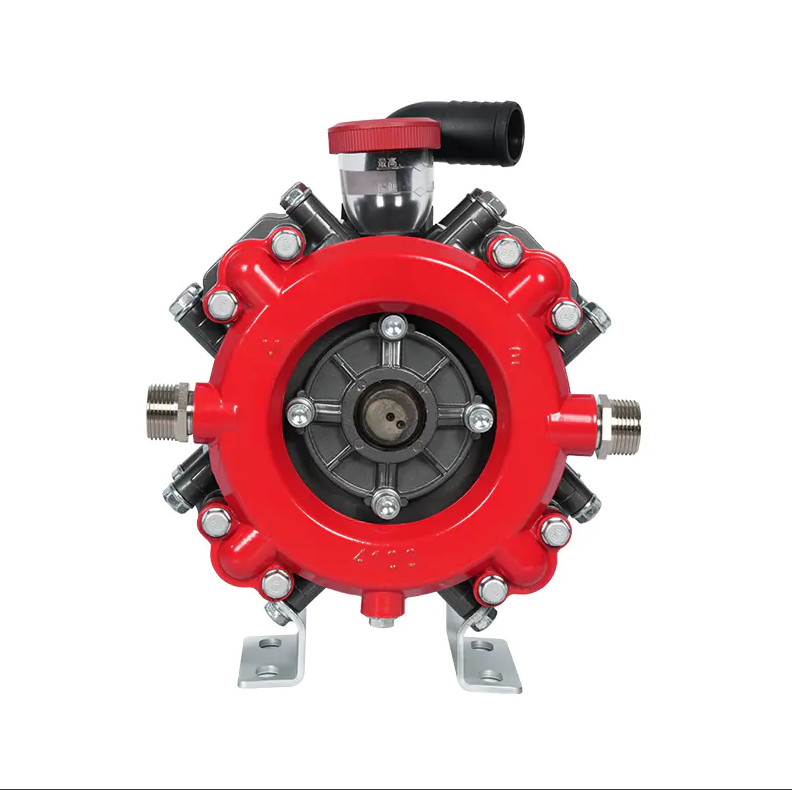
Once the spray pump used in agriculture starts, the whole process runs in a loop until it is turned off. Nothing is random inside that cycle. Every step follows the previous one.
What happens when the pump is switched on?
When the pump begins operating, liquid is drawn from a tank into the internal passage of the system. From there, it is pushed forward step by step.
This movement is created by mechanical force inside the pump. As parts move, liquid is pushed into tighter spaces, and pressure slowly builds up.
That pressure is what drives the liquid forward. Without it, the liquid would not travel through the system with enough force to reach the plants properly.
When the liquid reaches the end of the system, it arrives at the nozzle. At that point, it no longer behaves as a continuous flow. It breaks into smaller droplets and spreads out.
The result is a spray that covers plant surfaces in a wider pattern.
Why does pressure change the spraying result?
Pressure is one of the noticeable factors in how spraying behaves in the field.
When pressure increases, the spray tends to spread further and feel stronger. When pressure drops, the spray becomes lighter and more focused.
This matters because crop fields are not uniform. Some areas are dense, others are open. The same spray pattern does not always fit every condition.
Inside the pump, pressure is not controlled by a single switch. It comes from continuous mechanical movement and resistance inside the system. As liquid is pushed forward, that resistance turns into pressure.
The operator usually feels this change indirectly through the spray pattern rather than the mechanism itself.
What role does the nozzle actually play?
The nozzle is the last point before liquid reaches the crops. It has a very direct influence on how the spray looks and behaves.
Inside the nozzle, liquid is split into droplets. These droplets are what actually land on plant surfaces.
The shape of the spray depends on how the nozzle guides the liquid and how strong the incoming pressure is.
A small change in the nozzle condition can change how evenly the spray spreads. That is why this small part often has a noticeable impact during use.
Even though it is just one component at the end of the system, it decides how the entire process is delivered to the field.
How does liquid travel inside the system?
Before reaching the nozzle, liquid moves through a connected internal route.
It starts from the container, enters the pump section, and passes through internal channels designed to guide flow.
These channels are not open paths in every direction. They are shaped to keep liquid moving forward in a stable way.
Inside this route, the pump keeps pushing liquid continuously. The movement does not stop until the operation ends.
If the flow remains steady, the spray stays even. If flow changes, the spray pattern changes as well.
How do all parts interact during operation?
A spray pump is made of several connected parts, and none of them works in isolation.
The pump body starts movement. Internal channels guide the direction. Pressure builds inside the system. The nozzle completes the process by releasing spray.
Each part depends on the others. If one part behaves differently, the rest of the system reacts.
| Part | Function in simple terms |
|---|---|
| Pump body | Moves liquid forward |
| Flow channels | Keep direction stable |
| Pressure zone | Builds force for spraying |
| Nozzle | Shapes final spray |
| Control handle | Starts or stops flow |
This connection is what keeps the system working as one continuous process.
Why is consistent spraying important in crop protection?
In crop protection work, uneven spraying is a common concern.
If some areas receive more liquid than others, plant coverage becomes inconsistent. That can affect how evenly the crop is treated.
A steady spray helps reduce that difference. It allows liquid to land more evenly across leaves and surrounding areas.
The goal is not just coverage, but balanced coverage.
This balance is influenced by both the pump system and how it is used in the field.
What happens during long field operation?
In real agricultural work, spray pumps are often used for extended periods. During that time, the system keeps repeating the same cycle of movement and release.
Field conditions are rarely uniform. Plant height, spacing, and walking speed all change as work continues.
Even with those changes, the pump continues to push liquid at a steady internal pace.
The operator may not notice the internal cycle directly, but it continues in the background throughout use.
How does the user influence the spraying result?
While the pump controls the steady flow of liquid, the person operating the sprayer directly shapes how well the treatment lands on plants in the field. The machine only keeps pressure consistent; real‑world coverage depends entirely on how the user moves and positions themselves.
Distance from plants makes an immediate difference. Moving in close creates a narrow, focused spray that targets leaves directly. Stepping farther out spreads droplets over a wider area, which speeds up coverage but lightens how much liquid reaches each plant.
Walking speed also changes the outcome noticeably. Moving too quickly means each plant gets only brief exposure to the spray, which can leave gaps in coverage. Taking slower steps lets more liquid settle evenly across foliage for better absorption.
These small adjustments are second‑nature for field workers, not rigid calculated steps. Operators naturally shift distance and pace based on plant type, weather conditions, and treatment needs as they move through rows. The pump maintains steady output, while the user guides direction, spread and intensity for real‑world results.
What changes can appear during use?
With regular repeated use, sprayers slowly lose their original performance, with subtle shifts building over time rather than appearing suddenly. Most of these early‑stage changes are easy to miss at one but become obvious after multiple field applications.
Internal buildup from chemical residue, dirt or mineral deposits can slowly narrow liquid pathways inside the sprayer. This gradually makes flow uneven, causing sputtering or inconsistent pressure that leads to patchy coverage across crops.
Nozzles also wear down little by little from constant liquid flow, chemical exposure and minor bumps. Even slight wear or partial blockage distorts the spray shape, changing width, droplet size and uniformity. The even fan‑style pattern can turn lopsided, narrow or scattered without obvious warning at first.
These small performance drops rarely happen overnight. They creep in through daily use. Farmers and operators often pick up on tiny inconsistencies — such as needing slower movement for the same coverage or uneven wetting on leaves. These subtle signs are the earliest hints that cleaning, nozzle checks or simple maintenance are needed to keep the sprayer working reliably.
How does the system fit into modern farming work?
Modern farming often requires covering larger areas within limited time. Spray pumps help reduce manual effort by keeping liquid movement continuous and controlled.
The system does not rely on complex operation. It follows a basic cycle: move liquid, build pressure, release spray.
That simple cycle is what makes it usable across different field conditions, from small plots to larger open areas.
 Previous