

 EN
EN  English
 中文简体
中文简体 русский
This pipeline controller is the core control unit for self-propelled sprayers, integrating electronic, hydraulic, and intelligent detection functions. Its core purpose is to achieve precise, reliable, and automated control of the spray pipeline system, ensuring uniform spraying of the liquid, improving operational efficiency, while ensuring human and machine safety and reducing pesticide waste and environmental pollution.
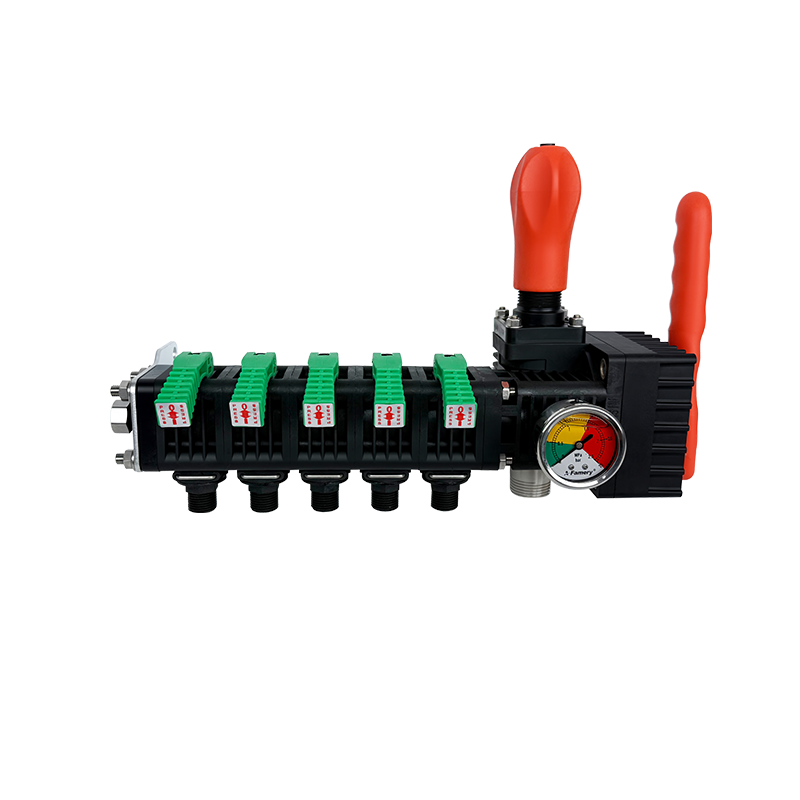
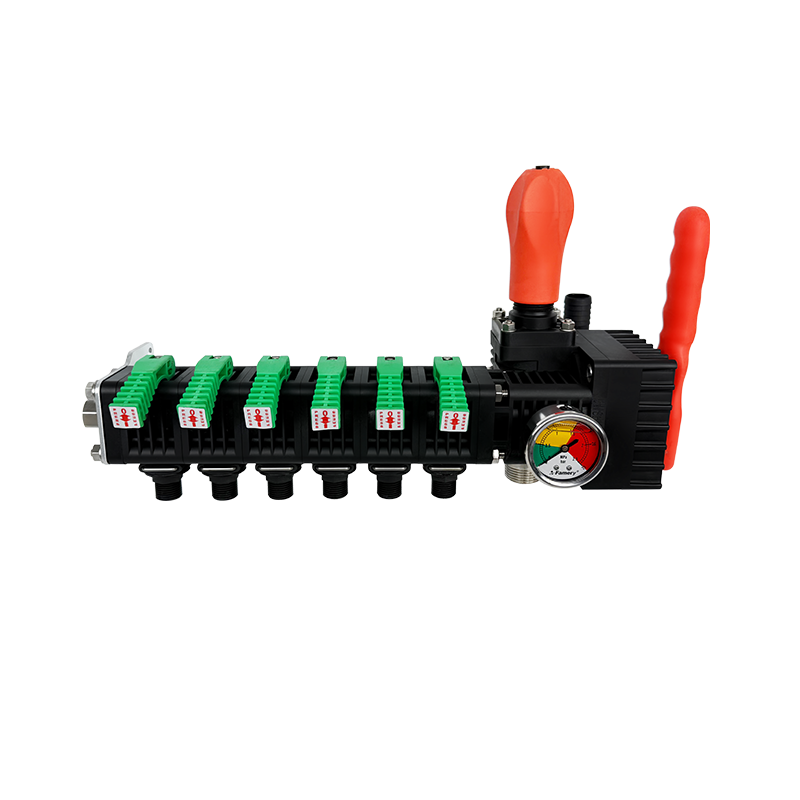
-
 0m²
0m²Manufacturing Base
-
 0+
0+Patented Technologies


Jinhua Shuangding Machinery Co., Ltd. is a Wholesale Flow Dividers Manufacturer and China Flow Dividers Factory, specializing in the development Manufacture and sales of the brand "SHANG DING", "JIN SHUANG DING", "A-FARMERY" series of PTO diaphragm pumps, spray nozzles, spray pipes, control regulators that match different power equipment (such as electric motor, diesel engine, gasoline engine, tractor, and motor vehicle, etc) to form various models of sprayer.
Since our establishment, we have devoted ourselves to developing various PTO diaphragm pumps, spray nozzle sets, filters, and control regulators. Based on advanced technology and scientific management, a modern production line, complete test equipment, and a quality control system, our product quality improves.
-
Feb 24,2026
What Are Common Issues in a Diaphragm Pump For Pesticides System?
Modern agricultural spraying relies on stable pressure, predictable flow, and reliable chemical handling. A Diaphragm Pump For Pesticides fits these needs b...
-
Feb 20,2026
How Does a Crop Spraying Diaphragm Pump Perform Under Dry Running?
Crop protection spraying is not only about moving liquid from a tank to a nozzle. In real field work, operators deal with chemical corrosion, unstable press...
-
Feb 13,2026
How Does an Agricultural Sprayer Pump Handle Multiple Nozzles?
An Agricultural Sprayer Pump is not just a supporting component in spraying equipment. It directly influences application accuracy, spray stability, and che...
-
Feb 06,2026
How Does a Sprayer Diaphragm Pump Support Long Hose Spraying?
A Sprayer Diaphragm Pump is a core component in many power sprayers used for garden, agricultural, and landscape applications. Its role is not just to move ...
How to Use Sprayer Flow Dividers?
Sprayer flow dividers are important components in agricultural spraying systems because they allow operators to distribute liquid evenly across multiple spray lines. These devices help maintain consistent flow rates, which supports uniform coverage and efficient use of chemicals. Understanding how to use flow dividers correctly ensures stable performance and reliable results during field operation.
To begin using a sprayer flow divider, the system should be cleaned and free of debris. Clean water should be circulated through the pump and hoses before installing or adjusting the divider. This reduces the likelihood of blockages that may affect flow distribution. Once the sprayer is prepared, the flow divider is typically installed downstream of the main pump and upstream of the spray lines. It connects to the manifold system where fluid is distributed to individual branches.
After installation, operators must set the desired flow rate for each output. Some flow dividers feature adjustable valves, which allow fine-tuning of flow to match the needs of different sections of a boom or separate spray devices. Many modern dividers include built-in gauges or indicators to help monitor performance. During operation, it is important to check for pressure fluctuations and verify that each outlet is delivering liquid at a steady rate.
Routine inspection is also important. If one section receives noticeably more or less liquid than others, the divider may require cleaning or adjustment. By keeping the device clear of obstructions and ensuring balanced pressure, operators can achieve consistent spraying patterns and maintain predictable system performance.
What Are Some Commonly Used Agricultural Sprayer Control Valves?
Agricultural sprayer control valves regulate fluid flow and pressure throughout the spraying system. They allow operators to start, stop, or adjust liquid delivery to specific sections, helping maintain efficiency and appropriate application rates. Several types of control valves are commonly used, each suited for a particular function within the system.
One widely used type is the manual shut-off valve. These valves enable operators to open or close flow to individual boom sections. They are straightforward, cost-effective, and suitable for smaller systems or applications where manual adjustments are acceptable.
These maintain consistent pressure within the spraying system regardless of changes in pump output or nozzle load. By stabilizing pressure, regulators help ensure uniform spray distribution. Many include bypass features to redirect excess liquid back to the tank when pressure exceeds the set limit.
The solenoid valve is also frequently used in modern equipment. These electrically controlled valves allow operators to manage flow remotely from the tractor cab. Solenoid valves provide rapid opening and closing action, which is useful for precision applications and automated section control.
Flow control valves help operators adjust the volume of liquid delivered to specific spray lines. They are often part of more advanced systems where flow must be matched to speed, crop type, or nozzle selection. Some systems combine flow control with computerized rate controllers to maintain consistent application rates under changing field conditions.
Agricultural Sprayer Water Splitter: How to Choose One?
A water splitter, also known as a spray line splitter or manifold, divides liquid from the main supply into multiple outlets. Choosing the right water splitter is important for achieving consistent spray distribution and accommodating the configuration of a sprayer. Several factors should be considered to ensure proper selection.
The number of outlets is a primary factor. Operators should choose a splitter that matches the number of spray lines or boom sections on their equipment. If future expansion is expected, a model with extra ports or modular options may be beneficial.
Material compatibility is essential. Water splitters are often exposed to fertilizers, pesticides, and other chemicals. Materials such as polypropylene, stainless steel, or reinforced nylon are commonly used because they offer resistance to corrosion and chemical degradation. Selecting a splitter compatible with the chemicals used on the farm can extend service life and maintain system reliability.
Flow capacity must match the sprayer’s pump output and nozzle requirements. A splitter with insufficient capacity may restrict flow, uneven coverage or pressure loss. Manufacturers typically provide flow ratings that help operators match the splitter to their overall system.
Ease of maintenance is an important consideration. Splitters with removable caps or accessible internal pathways make cleaning simpler, reducing downtime. If the equipment operates in dusty or debris-prone environments, a splitter with integrated filters may be advantageous.
Compatibility with existing fittings and hose sizes ensures smooth installation. By evaluating these factors, operators can select a water splitter that supports consistent performance and reliable spraying results.
Mr. Hu: 86-13506583086
Telephone: 86-579-82212159
Fax: 86-579-82212169
E-mail: [email protected]
Address: Building 9, 658 Dongshan Street, Tangxi Town, Wucheng District, Jinhua City, Zhejiang Province, China
Wholesale Flow Dividers
Copyright © Jinhua Shuangding Machinery Co., Ltd. All Rights Reserved
